

Table of Contents
Introduction

Custom supplement formulation is the process of turning a product concept into a technically workable nutritional format that can move through development, testing, scale-up, manufacturing, and packaging with consistent results.
For supplement brands, the formulation stage influences far more than the ingredient list. Dosage form, ingredient compatibility, physical properties, stability, sensory characteristics, processing conditions, and packaging requirements all need to work together.
A formula that looks suitable on paper may still require significant technical adjustment before it performs consistently on manufacturing equipment. For this reason, successful formulation development should connect laboratory design with real production conditions from the beginning.
What Is Custom Supplement Formulation?
Custom supplement formulation refers to the development of a nutritional product according to defined ingredient, dosage-form, processing, sensory, stability, and packaging requirements.
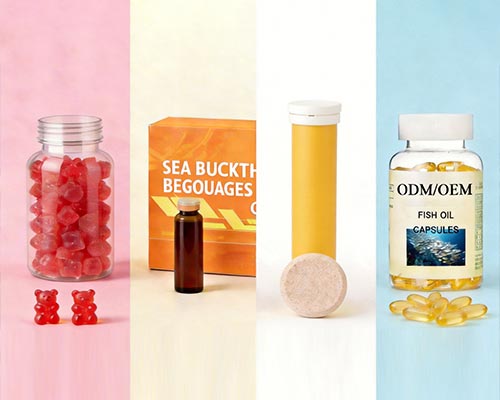
Products within the broader category of dietary supplements may be developed as capsules, softgels, tablets, powders, granules, or liquid formats. Each delivery system has different physical and manufacturing requirements.
A powder blend, for example, may need careful control of particle size, flowability, dispersibility, and moisture sensitivity. A softgel formulation requires additional attention to fill viscosity, shell compatibility, and oxidation stability. Tablet development depends heavily on powder compression behavior and mechanical characteristics.
Custom formulation therefore involves designing the entire product system rather than simply combining ingredients.
1. Start With a Clear Product Development Brief
A technically useful formulation project begins with a clear development brief.
The brief should define the intended dosage form, ingredient profile, serving format, sensory expectations, packaging concept, target market, and relevant technical requirements. These factors give the formulation team a practical framework for laboratory development.
Early definition is important because many formulation decisions are interconnected.
A formula intended for a small hard capsule, for example, must fit within a limited fill volume. A powder product may allow a larger ingredient load but introduce additional requirements related to taste, dispersibility, and moisture protection.
Keju’s custom supplement manufacturing solutions integrate formulation development with dosage-form selection, product customization, technical evaluation, and manufacturing planning.
This approach allows product structure and production feasibility to be considered together.
2. Ingredient Selection Must Consider Physical Behavior
Ingredient selection is not only about choosing the desired nutritional components.
Different materials may vary in particle size, density, moisture sensitivity, solubility, viscosity, oxidation sensitivity, and flow characteristics. These differences can influence how the complete formulation behaves during mixing, filling, compression, encapsulation, or liquid processing.
For example, combining a very fine powder with a much larger granular material can increase the risk of uneven distribution during handling.
Similarly, highly moisture-sensitive ingredients may require additional consideration during both processing and packaging.
Successful custom supplement formulation therefore evaluates ingredients as part of a complete physical system rather than as isolated components.
3. Dosage Form Selection Changes the Entire Formulation
Choosing the dosage form is one of the most important decisions in product development.
The same ingredient concept may behave very differently as a capsule, tablet, powder, softgel, or functional beverage.
| Dosage Form | Main Formulation Considerations |
|---|---|
| Hard Capsule | Powder flow, bulk density, fill volume, shell compatibility |
| Softgel | Fill viscosity, oil compatibility, shell interaction, stability |
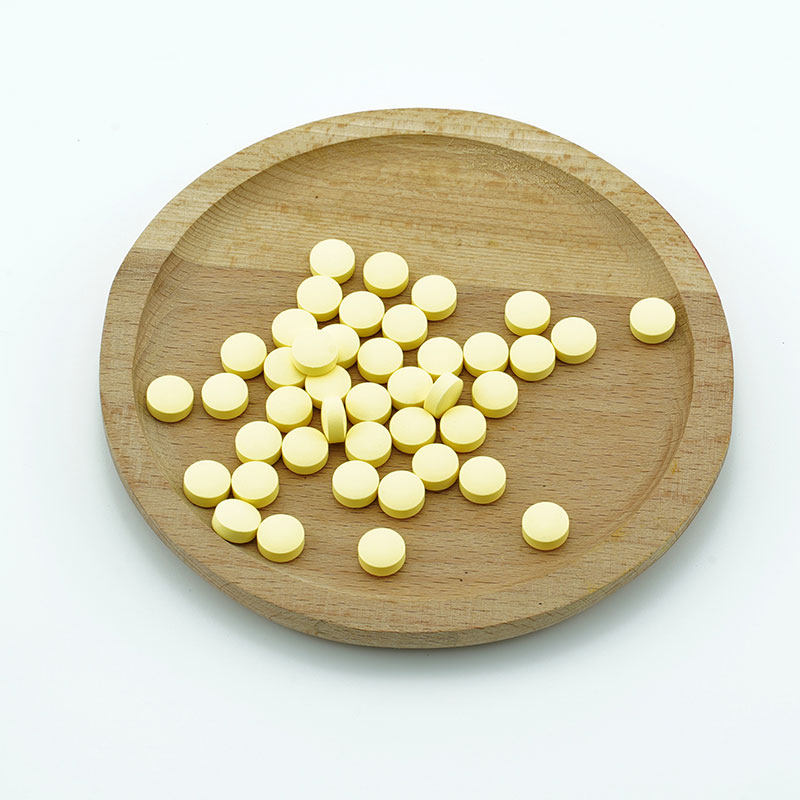
| Tablet | Compressibility, hardness, disintegration, blend uniformity |
| Powder | Mixing consistency, flowability, dispersibility, moisture control |
| Functional Beverage | Solubility, flavor, pH, appearance, physical stability |
Selecting the dosage form early allows the formulation to be designed around realistic processing conditions.
Keju’s supplement product range includes multiple dosage-form categories, which makes it possible to evaluate the relationship between formulation structure and manufacturing format during product development.
4. Ingredient Load Must Match the Physical Capacity of the Format

Every dosage form has physical limitations.
A capsule can only contain a certain volume of powder. A tablet must maintain suitable dimensions and mechanical characteristics. A softgel must balance fill volume with shell structure, while a powder or liquid product must remain practical for its intended serving format.
This means ingredient load cannot be considered independently from dosage form.
During formulation development, technical teams may evaluate bulk density, concentration, ingredient form, serving configuration, and unit dimensions.
If the ingredient system exceeds the physical capacity of the selected format, the formula may need to be adjusted or transferred to another dosage form.
Matching ingredient load with format capacity helps create a more practical manufacturing design.
5. Powder Flow and Blend Uniformity Affect Production Performance
Powder behavior is especially important in capsule, tablet, sachet, and powdered supplement production.
A formulation may contain ingredients with very different particle characteristics. When these materials are blended together, differences in particle size and density can influence uniformity.
Poor flowability may also affect how material moves through production equipment.
Formulators may therefore evaluate blending sequence, particle distribution, powder density, and flow characteristics during development.
The objective is to create a blend that remains sufficiently uniform during processing and handling.
This becomes more important as formulas become more complex because each additional ingredient can influence the behavior of the complete powder system.
6. Stability Should Be Built Into the Formula
Stability should be considered during formulation design rather than treated as a separate final-stage issue.
Ingredients may respond differently to moisture, oxygen, light, heat, and surrounding materials. The selected dosage form and packaging format can also influence how the product behaves during storage.
Powder formulations may require particular attention to moisture protection. Oil-based formulas may need additional evaluation of oxidation exposure, while liquid products can require monitoring of pH, solubility, appearance, and ingredient distribution.
Understanding these factors during development makes it easier to coordinate formulation design with processing and packaging requirements.
7. Ingredient Compatibility Can Influence Long-Term Product Quality
Multi-ingredient formulas can introduce compatibility challenges that may not be obvious during initial concept development.
Ingredients may interact physically or chemically when stored together. Changes in moisture, pH, oxygen exposure, or surrounding materials may influence color, texture, viscosity, dispersibility, or other product characteristics.
For this reason, custom supplement formulation should consider the complete ingredient combination rather than reviewing each component separately.
Compatibility assessment can also influence decisions about ingredient form, dosage format, processing sequence, and packaging system.
This systems-based approach becomes increasingly important in formulations containing many active and supporting ingredients.
8. Flavor Development Is Important for Powders and Beverages
Flavor and sensory characteristics play a major role when a product is consumed directly as a powder or liquid.
Some nutritional ingredients naturally have strong flavors, aromas, or aftertastes. Combining several ingredients may make the sensory profile even more complex.
Formulation development may therefore involve balancing sweetness, acidity, aroma, texture, and aftertaste while maintaining the desired product specifications.
Dispersibility is another important factor.
A powder may have a suitable flavor profile but still require additional technical development if it forms clumps or does not disperse consistently in liquid.
Sensory performance should therefore be evaluated together with physical formulation behavior.
9. Laboratory Formulas Need to Be Designed for Scale-Up
A formulation that performs well in a laboratory may behave differently on larger manufacturing equipment.
Scale-up introduces changes in mixing volume, processing time, material transfer, temperature, equipment geometry, and handling conditions.
These differences may influence powder flow, liquid viscosity, tablet compression, encapsulation behavior, or ingredient distribution.
For this reason, a strong custom supplement formulation process considers manufacturing feasibility before large-scale production begins.
Scale-up evaluation helps determine whether laboratory processing methods remain effective under larger production conditions.
The goal is to establish a process that remains consistent across different manufacturing batches.
10. Tablet Formulation Requires Compression Compatibility
Tablet development introduces its own technical challenges.
The powder blend must have suitable flow characteristics so that material can move consistently through the tablet production process.
The formulation must also respond appropriately to compression.
If the blend does not compress effectively, the resulting tablets may have inconsistent mechanical properties or require additional formulation adjustment.
Technical teams may evaluate factors such as hardness, weight consistency, disintegration, blend behavior, and physical appearance during development.
These characteristics help determine whether the formula is suitable for stable tablet manufacturing.
11. Capsule Formulation Depends on Fill Characteristics
Hard capsule development focuses heavily on powder density, flowability, and fill volume.
The formulation must fit within the selected capsule size while maintaining appropriate manufacturing behavior.
Ingredients with very low bulk density may require more physical volume than expected. Highly cohesive powders may also create filling challenges if they do not move consistently through equipment.
Capsule formulation therefore often involves balancing ingredient load with powder properties and capsule capacity.
Shell material may also be considered depending on the overall product design.
12. Softgel Formulation Requires Shell and Fill Compatibility
Softgels introduce another layer of formulation complexity because the fill material must remain compatible with the surrounding shell.
Fill viscosity, ingredient solubility, oil characteristics, moisture balance, and oxidation stability can all influence the development process.
The formulation must remain suitable for encapsulation while maintaining the intended physical characteristics of the finished softgel.
This means softgel development should consider both the internal fill formulation and the external capsule structure.
The interaction between these two components is one of the defining characteristics of softgel manufacturing.
13. Powder Formulation Requires Attention to Dispersibility
Powder products often provide greater flexibility in ingredient load, but they introduce additional challenges related to mixing and dispersibility.
A formulation may need to remain uniform during packaging while also dispersing effectively when mixed with water or another liquid.
Particle characteristics can influence whether the powder dissolves, disperses, floats, settles, or forms visible clumps.
Formulators may evaluate these properties during product development and adjust ingredient form or blending strategy when required.
For flavored powder products, sensory performance must also remain compatible with the technical characteristics of the blend.
14. Liquid Formulation Requires Control of Solubility and Appearance
Liquid nutritional formats require a different formulation strategy from powders, tablets, or capsules.
Ingredients must remain appropriately distributed within the liquid system while maintaining the intended appearance, texture, and stability.
Solubility, pH, viscosity, and ingredient compatibility may all influence the final formulation.
Some ingredients dissolve easily, while others may require additional technical consideration to maintain consistent distribution.
Flavor development can also be closely connected to the formulation because changes in pH or ingredient concentration may influence the sensory profile.
15. Packaging Is Part of the Product System
Packaging should be evaluated alongside formulation development.
Different packaging formats provide different levels of protection against moisture, oxygen, light, and environmental exposure.
For example, moisture-sensitive powders may require packaging with suitable barrier characteristics, while oil-containing softgels may need protection from excessive light or oxygen exposure.
Liquid products require packaging that remains compatible with the formulation throughout storage.
The physical size of the dosage form also influences packaging configuration.
Considering these factors during development helps align formula design with the environment the finished product will experience.
16. Pilot Production Connects Laboratory Development With Manufacturing
Pilot production is an important stage between laboratory formulation and larger manufacturing runs.
This stage helps technical teams evaluate how the formula behaves on equipment that more closely represents full-scale production conditions.
A powder may flow differently at larger volume. A tablet formula may require adjustments during compression. A liquid formulation may respond differently to mixing equipment, while a softgel fill may behave differently during encapsulation.
Pilot evaluation provides useful information for refining processing conditions and technical specifications.
This stage helps transform a laboratory formulation into a repeatable manufacturing process.
17. Quality Specifications Create a Repeatable Product Standard
A production-ready formulation requires clearly defined specifications.
These specifications establish measurable parameters for raw materials, manufacturing stages, and finished products.
Depending on the dosage form, specifications may include appearance, weight, moisture characteristics, tablet hardness, capsule properties, powder characteristics, liquid consistency, or other relevant physical parameters.
Clearly documented specifications help production teams evaluate whether different manufacturing batches remain aligned with the established product standard.
They also provide a technical reference when controlled adjustments are required during future production.
18. Documentation Supports Consistent Manufacturing

Once a formula and production process have been established, technical documentation becomes an important part of manufacturing control.
Documentation may cover formulation instructions, raw material requirements, blending sequence, processing conditions, packaging specifications, and quality checkpoints.
Maintaining clear technical records supports repeatability across different production batches.
It also allows manufacturing teams to understand how specific formulation decisions relate to processing conditions.
For long-term product development, documentation helps preserve the technical structure of the original formula.
Conclusion
Custom supplement formulation connects ingredient selection, dosage-form design, stability, manufacturing feasibility, packaging, and quality control into one coordinated development process.
A strong formula must function as more than an ingredient list. It must behave predictably during blending, compression, encapsulation, filling, storage, and packaging.
Capsules, tablets, softgels, powders, and liquid products each introduce different technical requirements, which makes early dosage-form selection especially important.
By evaluating ingredient compatibility, physical characteristics, scale-up behavior, packaging requirements, and quality specifications from the beginning, product developers can create formulations that are better prepared for consistent manufacturing.
FAQ
What is custom supplement formulation?
Custom supplement formulation is the development of a nutritional product around defined ingredient, dosage-form, processing, sensory, stability, and packaging requirements.
Why is dosage-form selection important during formulation?
Different dosage forms have different physical and manufacturing requirements. Capsules, tablets, softgels, powders, and liquids therefore require different formulation strategies.
Can one formula be used across several dosage forms?
Not necessarily. A formula designed for capsule filling may require technical adjustments before it can be used for tablet compression, liquid processing, or powder applications.
Why does ingredient compatibility matter?
Ingredients may differ in moisture sensitivity, particle characteristics, solubility, viscosity, or other physical properties. These differences can influence processing behavior and product stability.
What is the role of pilot production?
Pilot production helps evaluate how a laboratory-developed formula behaves under manufacturing conditions before moving into larger-scale production.