


Table of Contents
Introduction
Custom supplement development is the process of transforming an initial product concept into a technically defined nutritional format that can move through formulation, evaluation, pilot production, scale-up, manufacturing, and packaging.
For supplement brands, successful development requires much more than selecting ingredients. The characteristics of those ingredients must align with the intended dosage form, serving configuration, production method, stability requirements, sensory expectations, and packaging environment.
A well-structured development process helps identify technical limitations early. It also creates a clearer path from laboratory work to repeatable manufacturing.
What Is Custom Supplement Development?
Custom supplement development brings together formulation design, dosage-form selection, ingredient evaluation, production planning, quality specifications, and packaging considerations within one coordinated process.
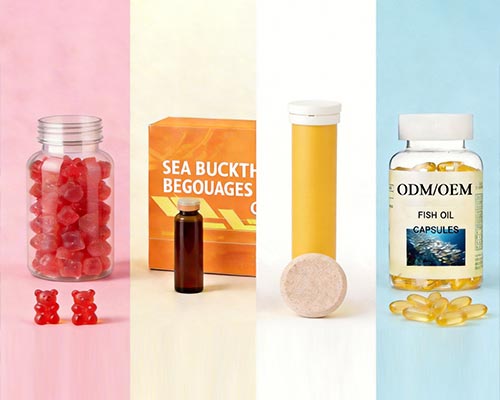
Products within the broader category of dietary supplements can appear in many physical formats, including capsules, softgels, tablets, powders, granules, and liquids. Each format requires a different development strategy.
A capsule formula, for example, must work within a defined fill volume. A tablet formulation must have suitable compression characteristics. A powder product requires attention to blending and dispersibility, while a liquid format introduces considerations such as solubility, pH, viscosity, and physical stability.
Custom supplement development therefore focuses on building a complete and manufacturable product system rather than simply defining an ingredient list.
1. Development Begins With a Clear Product Concept
Every project should begin with a clearly defined product concept.
This stage establishes the intended dosage form, ingredient profile, serving format, appearance, sensory characteristics, packaging direction, and technical requirements.
These decisions create the framework for later formulation work.
If the intended product is a hard capsule, the formulation must fit within the physical capacity of the selected capsule size. If it is a powder drink, developers must also consider flavor, dispersibility, particle behavior, and moisture sensitivity.
Defining these requirements early allows the technical team to evaluate feasibility before the project progresses further.
Keju’s custom supplement manufacturing solutions combine formulation development, dosage-form selection, testing, customization, and manufacturing planning within one development pathway.
2. Ingredient Selection Requires Technical Evaluation
Ingredient selection is one of the earliest technical stages of development.
Different ingredients may vary in particle size, density, solubility, moisture sensitivity, viscosity, oxidation sensitivity, and processing behavior.
These differences can affect how the complete formula performs during manufacturing.
For example, a fine powder may behave differently from a granular material during blending. An oil-based ingredient may require a different dosage-form strategy from a dry botanical powder.
Developers should therefore evaluate ingredient characteristics together rather than treating every component as an isolated material.
This helps determine whether the selected ingredients are physically compatible with the intended product format.
3. Dosage Form Should Match the Formula
Dosage-form selection is a central part of custom supplement development.
The selected format affects ingredient capacity, processing method, equipment requirements, packaging configuration, and physical product characteristics.
| Dosage Form | Main Development Considerations |
|---|---|
| Hard Capsule | Powder density, flow, fill volume, shell compatibility |
| Softgel | Fill viscosity, oil compatibility, shell interaction, oxidation stability |
| Tablet | Compressibility, blend flow, hardness, disintegration |
| Powder | Blend uniformity, dispersibility, flavor, moisture control |
| Liquid | Solubility, pH, viscosity, appearance, physical stability |
A formula that works well in one format may require substantial adjustment before it can be used in another.
For this reason, the dosage form should normally be selected during the early stages of development.
4. Ingredient Load Must Remain Physically Practical
One common development challenge is matching the desired ingredient quantity with the physical capacity of the dosage form.
Capsules have limited internal volume. Tablets must maintain practical dimensions and suitable compression characteristics. Softgels need a balance between shell dimensions and fill properties.
Powders and liquids may accommodate larger ingredient quantities, but these formats introduce different considerations related to serving configuration and sensory performance.
Technical teams may evaluate bulk density, concentration, unit dimensions, and ingredient form during this stage.
Matching ingredient load with physical format helps prevent avoidable changes later in development.
5. Formulation Design Connects Ingredients With Processing
Once the overall concept is defined, formulation development begins to connect ingredient selection with manufacturing requirements.
The formulation must behave appropriately during mixing, filling, compression, encapsulation, or liquid processing.
This may involve evaluating material flow, particle distribution, viscosity, moisture behavior, or ingredient compatibility.
A technically strong formulation should be developed with real production conditions in mind.
This is important because a formula that performs well in a small laboratory container may behave differently when transferred to larger equipment.
Development therefore needs to consider both composition and process behavior.
6. Powder Behavior Can Influence Several Dosage Forms
Powder characteristics are important not only for powdered products but also for capsules and tablets.
Particle size, shape, bulk density, surface characteristics, and moisture can all influence powder flow and blending.
When materials with different physical properties are combined, segregation may occur during handling.
This can make it more difficult to maintain a consistent mixture throughout production.
Developers may therefore evaluate mixing sequence, particle distribution, density differences, and material transfer conditions.
Understanding powder behavior early can help support more consistent manufacturing later.
7. Stability Should Be Considered During Development
Stability is part of product development from the beginning.
Ingredients may respond differently to moisture, oxygen, light, temperature, or interactions with surrounding materials.
These factors can influence physical appearance, texture, viscosity, powder behavior, or other product characteristics.
Different dosage forms create different stability environments.
Oil-containing softgels may require particular attention to oxidation exposure. Powders may be sensitive to moisture, while liquid formulas may require closer evaluation of pH, solubility, and ingredient distribution.
Considering stability early helps align formulation design with manufacturing and packaging decisions.
8. Ingredient Compatibility Matters in Complex Formulas
Multi-ingredient products can become increasingly complex as additional components are introduced.
Different materials may interact physically during storage or processing. Their moisture sensitivity, particle characteristics, solubility, or chemical environment may differ considerably.
Compatibility assessment helps developers understand whether ingredient combinations remain suitable within the selected format.
It may also influence decisions about ingredient form, processing sequence, packaging, or dosage-form selection.
A formula should therefore be evaluated as a complete system rather than as a collection of unrelated components.
9. Sensory Development Is Important for Powders and Liquids
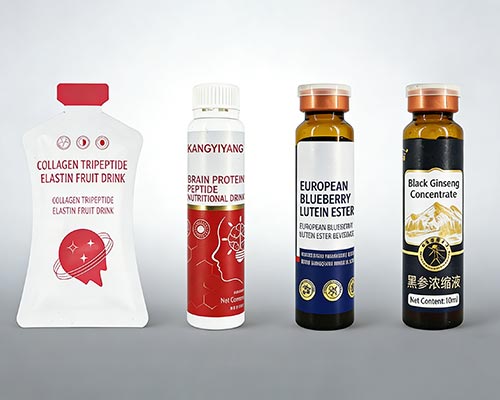
Powder drinks and liquid products require additional attention to sensory characteristics.
Some nutritional ingredients naturally have strong flavor, aroma, color, or texture.
When several ingredients are combined, these characteristics can become more noticeable.
Formulation development may therefore involve balancing sweetness, acidity, aroma, mouthfeel, and aftertaste.
Physical behavior is equally important.
A powder should disperse appropriately when mixed, while a liquid should maintain acceptable appearance and ingredient distribution.
Sensory development and technical formulation should therefore progress together.
10. Laboratory Evaluation Helps Refine the Formula
Laboratory development allows technical teams to observe how the formula behaves before it moves into larger production stages.
This stage may involve small-scale blending, compression trials, capsule filling tests, liquid mixing, or other format-specific evaluations.
Developers can review physical characteristics and determine whether adjustments are needed.
For example, a powder may require improved flow, a tablet formula may need different compression characteristics, or a liquid may require further work on ingredient distribution.
Laboratory evaluation helps create a stronger technical foundation before pilot production begins.
11. Pilot Production Bridges Development and Manufacturing
Pilot production is an important transition stage.
It allows the formula to be evaluated using conditions that more closely resemble larger-scale manufacturing.
Changes in equipment size, mixing efficiency, material transfer, processing time, and environmental conditions can influence product behavior.
A formula that performs consistently during small laboratory work may therefore need further adjustment at pilot scale.
Pilot production helps identify these differences and refine the process before routine manufacturing.
12. Scale-Up Requires Process Evaluation
Scale-up is not simply a matter of increasing ingredient quantities.
As batch size changes, several production variables may also change.
Mixing behavior, transfer methods, equipment geometry, temperature exposure, compression speed, or filling conditions may differ between laboratory and manufacturing environments.
Developers should therefore evaluate how the process changes at larger scale.
The objective is to establish a production method that remains repeatable across batches rather than relying only on the behavior observed during early development.
13. Quality Specifications Define the Finished Product
A developed formula requires clear technical specifications.
Specifications create measurable references that can be used during manufacturing and finished-product evaluation.
Depending on the dosage form, these may include appearance, weight, dimensions, moisture characteristics, powder flow, tablet hardness, capsule properties, liquid consistency, or other relevant parameters.
Clearly defined specifications help translate a product concept into a repeatable manufacturing standard.
They also support more consistent evaluation across different production batches.
14. Packaging Development Should Not Be Left Until the End
Packaging is part of the complete product system.
Different materials provide different levels of protection from moisture, oxygen, light, and environmental exposure.
A moisture-sensitive powder may require a different packaging strategy from an oil-based softgel or liquid format.
Physical product characteristics also influence packaging dimensions and configuration.
Keju’s supplement product range includes capsules, softgels, tablets, powders, and functional beverages, illustrating how different dosage forms require different development and packaging considerations.
Considering packaging during development helps align the finished format with its storage environment.
15. Documentation Supports Repeatable Manufacturing
Technical documentation becomes increasingly important as the product moves toward routine production.
Development records may define raw material specifications, formulation instructions, processing steps, equipment parameters, packaging requirements, and quality checkpoints.
Clear documentation helps preserve the technical structure established during development.
It also provides a reference when approved adjustments to materials or processing conditions need to be evaluated later.
This creates a more controlled transition from development work to repeatable manufacturing.
16. Different Dosage Forms Require Different Development Priorities
Although the overall development process follows similar principles, technical priorities vary by dosage form.
Hard capsules typically require closer attention to powder flow, density, and fill capacity.
Softgels focus more heavily on fill characteristics, shell compatibility, and oil-based formulation behavior.
Tablets require evaluation of compression, hardness, and blend characteristics.
Powders emphasize mixing, dispersibility, moisture control, and sensory properties, while liquid formats require close attention to solubility, pH, viscosity, and physical stability.
Recognizing these differences early helps prevent a generic development approach from being applied to every product format.
17. Development Teams Should Think About Manufacturing Early
One of the most important principles in custom supplement development is connecting formulation work with production requirements as early as possible.
Formulation specialists may focus on ingredient characteristics, while manufacturing teams understand how those materials behave through actual equipment.
Bringing these perspectives together helps identify technical limitations before the formula becomes difficult to modify.
This is especially useful for multi-ingredient products, where physical properties can become increasingly complex.
A manufacturing-aware development process creates a stronger connection between the initial concept and the final production method.
18. Successful Development Creates a Complete Product System
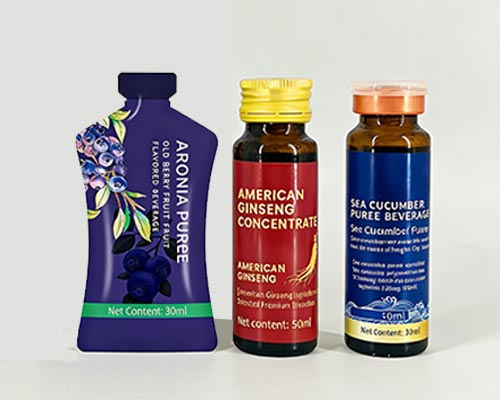
The goal of custom supplement development is not simply to produce a successful laboratory sample.
The finished formula should work together with the selected dosage form, manufacturing process, quality specifications, packaging system, and production documentation.
Each part influences the others.
A change in ingredient form may affect blending. A different dosage format may change serving configuration. Packaging decisions may influence stability requirements.
Treating these elements as one connected system helps create a product that is technically better prepared for repeatable manufacturing.
Conclusion
Custom supplement development connects concept design, ingredient evaluation, formulation, dosage-form selection, stability, pilot production, scale-up, quality specifications, and packaging into one coordinated process.
Successful development starts by defining realistic technical requirements and understanding how the selected ingredients behave within the intended product format.
Capsules, softgels, tablets, powders, and liquids each introduce different manufacturing considerations, which is why dosage-form selection and production feasibility should be evaluated early.
By connecting laboratory formulation with manufacturing conditions, developers can build products that are better prepared for stable, repeatable production.
FAQ
What is custom supplement development?
Custom supplement development is the process of transforming a nutritional product concept into a defined formulation and dosage form that can move through evaluation, scale-up, manufacturing, quality control, and packaging.
What is the difference between formulation and product development?
Formulation focuses primarily on the composition and technical behavior of the formula. Product development is broader and also includes dosage-form selection, pilot production, scale-up, packaging, specifications, and manufacturing planning.
Why should dosage form be selected early?
Each dosage form has different physical and manufacturing requirements. Selecting the format early allows ingredients and processing methods to be evaluated under realistic technical conditions.
Why is pilot production important?
Pilot production helps determine how a laboratory-developed formula behaves under conditions that more closely resemble larger manufacturing equipment and batch sizes.
What should be defined before routine manufacturing begins?
The formula, raw material specifications, manufacturing process, relevant quality parameters, packaging requirements, and technical documentation should be clearly established before routine production.