


On this page
Fish oil vs algae oil comes down to the omega-3s listed in a usable serving, the source you prefer, and the rest of the formula. Fish oil commonly supplies EPA and DHA. Algal oils can supply DHA, or DHA together with EPA, depending on the product. A vegetarian oil does not automatically make the finished capsule vegetarian: its shell needs checking too. Neither source wins simply because its name sounds more natural.
Begin with the EPA and DHA lines
Imagine two labels with the same large oil-weight number on the front. One declares both EPA and DHA; the other declares mainly DHA. They are different comparisons even before price enters the picture. Write the declared EPA and DHA amounts beside the number of capsules in the serving. This keeps the source comparison tied to what you would actually take, rather than to the total weight of oil.
Compare a day of use
Place the serving count, EPA, DHA, source, added ingredients, and storage directions side by side. Then ask which format fits an appropriate, clearly defined need. Treat a product's environmental or sourcing claim as a separate question with its own supporting documentation. Health effects, allergy suitability, and sourcing practices cannot all be established by one marine-origin word on the front of the bottle.
A fish-derived peptide and an algal oil answer different nutrition questions. A capsule shell may also have a different origin from the fill. If avoiding animal ingredients matters to you, checking only the featured marine ingredient is incomplete. If an allergy is relevant, obtain the complete source and allergen details and appropriate professional advice rather than relying on a blue ocean image.
A side-by-side check for fish oil vs algae oil
| Point to compare | The distinction to keep |
|---|---|
| Begin with the EPA and DHA lines | This keeps the source comparison tied to what you would actually take, rather than to the total weight of oil. |
| A plant-based choice has two parts | Source information is useful; it is not a substitute for a complete ingredient and allergen statement. |
| The decision you can make today | Keeping those questions separate makes the choice much clearer. |
A plant-based choice has two parts
For someone avoiding animal ingredients, algae can address the oil source while a plant-derived shell addresses the capsule. Flavorings and other ingredients still belong in the check. Someone with a fish allergy needs an individual medical assessment rather than an assumption that changing the front-label word removes every concern. Source information is useful; it is not a substitute for a complete ingredient and allergen statement.
A vegetarian shopper compares two omega-3 bottles
One bottle names algal oil but lists gelatin in the shell. Another states a plant-derived shell but gives only DHA on the front. Neither front label answers the whole question. The first shopper needs to check the shell source; the second needs to read whether EPA is present and in what amount. It is possible for the oil source to suit a preference while the finished capsule does not. The next step is a two-column note: oil source and shell source on one line, EPA and DHA per labeled serving on the next. If either amount is absent, do not fill it in from the other product. This short exercise can resolve the practical choice without claiming that every algae product is identical or that one source is universally superior.
Read the bottle before the first pour
Look for the amount of oil and the declared omega-3 amounts per labeled volume. A small, concentrated serving and a larger, less concentrated serving can deliver similar EPA/DHA amounts. That does not make their measuring instructions interchangeable. Keep the supplied device with the bottle, and use a suitable marked device if the instructions call for one. Do not estimate a supplement serving by the size of a mouthful.
Some oils include added vitamins or flavorings. Those ingredients can change the comparison even when the EPA/DHA amount matches. Count added nutrients across the products you already use, check fish-source information, and follow the labeled storage conditions. The aim is a transparent serving that answers your need; winning a contest for the largest front-label number is irrelevant to that job.
The decision you can make today
Choose a source you can identify, a clearly stated EPA/DHA serving, and a format you can use consistently if supplementation is appropriate. If you already eat seafood, include that habit in the conversation about need. An omega-3 capsule does not reproduce the protein and other nutrients in a fish meal, and a fish meal does not tell you the contents of a particular capsule. Keeping those questions separate makes the choice much clearer.

Identify what the number refers to
A product may state a total phospholipid amount, a specific ingredient source, or an omega-3 amount associated with a phospholipid-containing oil. Those are not the same declaration. If you are comparing omega-3s, use the EPA and DHA lines. If you are comparing choline, use the declared choline amount. A general phospholipid weight cannot be substituted for either without additional composition information.
Look for a vitamin E line with an amount and a unit. If the package only lists mixed tocopherols among other ingredients, ask the company what that statement means for this product. Do not invent an amount from the position in the list. Likewise, the fish oil weight says nothing about the amount of vitamin E: they are different ingredients measured for different reasons.
Separate three common label situations
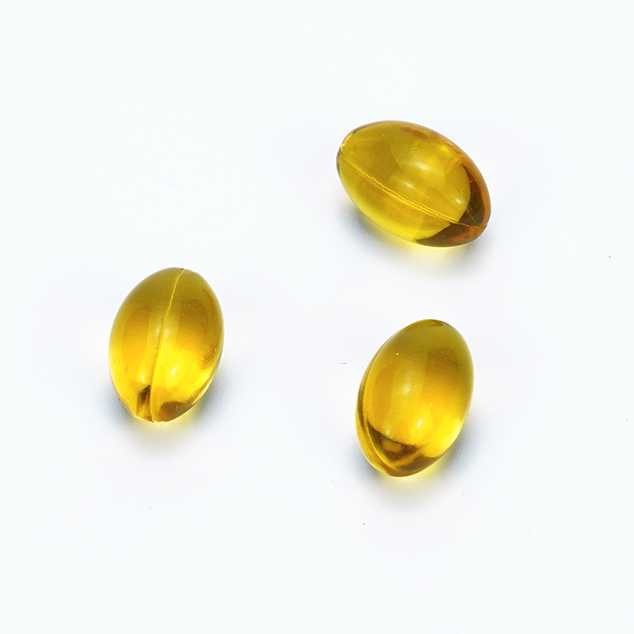
First, a fish oil may declare EPA and DHA without a vitamin D line. Second, an oil may have vitamin D deliberately added. Third, a fish liver oil can contain vitamins that deserve their own review. Read the actual panel rather than applying one situation to all marine oils. A picture of a fish does not identify its nutrient composition or tell you whether the product includes added vitamins.
Consider whether you can read the directions, handle the container, and take the labeled format comfortably. A smooth shell can be helpful to some people, but photographs do not establish how it will feel for you. You do not need to turn supplementation into a daily struggle. A format decision should support correct use, and the decision about whether omega-3 supplementation is needed remains a separate question.
A shell can make use easier without changing the need
A capsule encloses ingredients in a form that can be counted and handled. It may reduce direct contact with the taste or texture of the fill. Those are ordinary format advantages, not proof that the ingredient is necessary or that every capsule has superior absorption. First understand what the serving contains and why it is being considered. Then judge whether the shell, size, source, and handling make the product practical for you. A convenient delivery format and an appropriate nutrient plan should support each other.
A product can fit a vegetarian preference and still contain an ingredient relevant to an allergy. It can also contain animal-derived material without involving the particular source someone needs to avoid. Read the complete ingredient and allergen information rather than treating one broad claim as the answer to both questions. The shell, carrier, and featured ingredient may have different origins. If an allergy is involved, seek advice suited to the individual situation and obtain clear source information. A general natural or plant-themed image does not resolve that assessment.
Origin and preparation are separate facts
Knowing the plant, animal, or other source is useful, but it does not fully describe the prepared ingredient. A powder, extract, oil, peptide preparation, and flavored liquid can come from related source material while differing substantially in composition. Keep the source name and the preparation description together. This prevents a familiar food or traditional ingredient story from being applied automatically to a concentrated or mixed supplement. Evidence about one preparation should stay connected to that preparation until there is a sound basis for extending it.
Examples and further reading
Keju examples related to fish oil vs algae oil: Gélules molles à l'huile de poisson et Gélules d'huile d'algue. Compare the exact formula rather than assuming the examples are interchangeable.
References: NIH omega-3 consumer fact sheet, NIH vitamin E consumer fact sheet, NIH vitamin D consumer fact sheet, NHS problems swallowing pills, FDA Supplement Facts label guide.
Frequently asked questions
Which omega-3 amounts should I compare?
Imagine two labels with the same large oil-weight number on the front. One declares both EPA and DHA; the other declares mainly DHA.
Does algal oil make the whole capsule vegetarian?
For someone avoiding animal ingredients, algae can address the oil source while a plant-derived shell addresses the capsule. Flavorings and other ingredients still belong in the check.
Is one omega-3 source best for everyone?
Choose a source you can identify, a clearly stated EPA/DHA serving, and a format you can use consistently if supplementation is appropriate. If you already eat seafood, include that habit in the conversation about need.
Can you give a practical example?
One bottle names algal oil but lists gelatin in the shell. Another states a plant-derived shell but gives only DHA on the front.
Where can I check the background for fish oil vs algae oil?
Use the linked NIH omega-3 consumer fact sheet and the exact product label. Keep a general ingredient explanation separate from an individual recommendation or a claim about a different formula.