
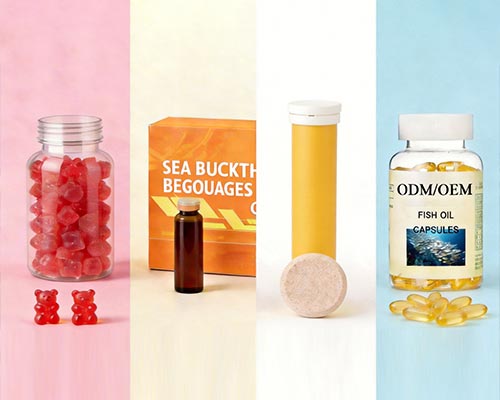
Table of Contents
Introduction
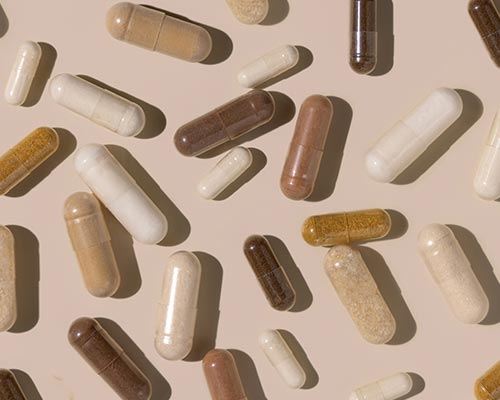
Soft gelatin capsules are widely used for products containing oils, liquid blends, suspensions, and selected semi-solid formulations. Unlike hard two-piece capsules, a softgel is formed, filled, and sealed as one continuous unit, which means the shell and the internal fill must be developed as a compatible system rather than treated as two independent components.
That distinction is important during product development. A formula may look stable in a mixing vessel but behave differently after encapsulation. The fill can influence shell softness, drying behavior, sealing, appearance, and long-term storage, while the shell composition and manufacturing conditions can also affect the finished product. For this reason, successful soft gelatin capsules depend on coordinated decisions involving gelatin properties, plasticizer selection, fill viscosity, moisture balance, processing temperature, sealing conditions, drying, testing, and packaging.
Keju Health’s soft gelatin capsules manufacturing platform supports the development of oil-based and other compatible softgel formulations, with formula design, encapsulation, quality control, and packaging considered as parts of the same production process.
This guide explains how soft gelatin capsules are structured and manufactured, what types of fills are suitable, why shell-to-fill compatibility matters, and which technical controls contribute to consistent production.
What Are Soft Gelatin Capsules?
Soft gelatin capsules, commonly called softgels, are single-piece capsules in which a flexible shell completely surrounds a liquid, suspension, or semi-solid fill. The shell is usually prepared from gelatin, water, and a plasticizing ingredient that gives it the flexibility required for forming and sealing.
The broader softgel format differs fundamentally from a conventional hard capsule. Hard capsules are normally manufactured as separate cap and body components and are later filled and closed. Soft gelatin capsules are created through a coordinated form-fill-seal process in which the shell material is shaped around the formulation while the fill is introduced.
This production method makes softgels particularly suitable for many oil-based formulations. However, the phrase “oil-based” should not be interpreted as meaning that every liquid can automatically be encapsulated. The fill still needs to meet requirements for viscosity, chemical compatibility, moisture behavior, temperature sensitivity, particle distribution, and interaction with the gelatin shell.
The final softgel is therefore a complete engineered system. Its appearance may be simple, but its performance depends on the relationship between shell formulation, fill composition, processing conditions, drying, and packaging.
How the Soft Gelatin Capsule Shell Is Designed
The shell of a conventional softgel typically contains gelatin, water, and a plasticizer. Additional ingredients may be introduced to adjust color, opacity, appearance, or processing characteristics, depending on the product specification.
Gelatin provides the structural network. During preparation, it is hydrated and processed into a fluid gelatin mass that can later be converted into flexible ribbons. Once formed and dried, the gelatin creates the outer structure that holds and protects the internal fill.
The plasticizer is equally important because gelatin alone would not provide the required softness and flexibility. Plasticizing ingredients help the shell bend during encapsulation and reduce brittleness after drying. The selected type and amount influence shell elasticity, drying behavior, storage stability, and the way the capsule responds to different environmental conditions.
Water is needed during preparation and encapsulation, but a large part of the manufacturing challenge comes from controlling how much water remains in the shell after drying. Too much or too little moisture can alter mechanical properties. An overly dry shell may become brittle, while excessive moisture may make the capsule softer, stickier, or more susceptible to deformation.
The shell formulation must therefore be matched to the fill rather than developed in isolation. A fill containing ingredients that attract moisture may change the shell differently from a non-hygroscopic oil. Similarly, some liquid components may migrate into the shell and alter its texture over time. Compatibility evaluation should begin before routine production rather than after a storage problem appears.
Which Fill Materials Are Suitable for Soft Gelatin Capsules?
Soft gelatin capsules are particularly well suited to oil-based fills, but the potential formulation range is broader than simple oils. Depending on the manufacturing system and compatibility studies, the internal material may be a solution, suspension, paste-like system, or selected semi-solid formulation.
Oil solutions are among the more straightforward applications because the selected ingredients are dissolved or uniformly distributed in an oil carrier. When the formula remains homogeneous during storage and production, controlled filling is easier to maintain.
Suspension fills are more complex. In these systems, fine solid particles remain dispersed in a liquid carrier rather than fully dissolving. Particle size, viscosity, density, and mixing conditions become critical because particles can settle while the material remains in a holding tank or moves through filling equipment. A suspension that appears uniform immediately after mixing may not remain uniform throughout a longer production run.
Semi-solid fills require another processing strategy. Their viscosity may change significantly with temperature, which can influence pumping, dosing, and encapsulation. The manufacturing process must maintain an appropriate temperature range without exposing sensitive ingredients to unnecessary thermal stress.
Water-rich formulations are generally more challenging for traditional gelatin softgels because water can interact strongly with the shell. Formulas containing volatile solvents or highly reactive components may also require additional evaluation. The central question is not simply whether a material can be pumped into a capsule, but whether it can remain compatible with the shell throughout manufacturing and storage.
Shell-to-Fill Compatibility Is the Core Development Issue
A well-designed softgel fill should remain physically and chemically compatible with the gelatin shell. This relationship is one of the most important differences between soft gelatin capsules and many other dosage forms.
The fill may contain oils, suspended powders, flavors, botanical components, vitamins, or other materials that interact differently with gelatin and plasticizers. Some components may migrate into the shell, while moisture or plasticizer may move in the opposite direction. These exchanges can affect shell hardness, flexibility, appearance, or sealing over time.
Compatibility testing should therefore examine more than the appearance of freshly produced capsules. A softgel that looks normal after encapsulation may gradually become softer, harder, cloudy, sticky, or distorted during storage if the fill and shell are not well matched.
Viscosity can also affect compatibility indirectly. A very thin fill may behave differently at the sealing area than a thicker oil, while an extremely viscous formula may require different filling temperatures or pressures. Suspended particles can introduce additional challenges if they migrate toward the sealing region or create uneven flow through the dosing system.
The formulation team should evaluate the complete fill composition, including minor ingredients. A small amount of flavor carrier, solvent, water-containing extract, or processing component can sometimes change shell behavior more than the main oil itself.
The Manufacturing Process of Soft Gelatin Capsules
Softgel production typically begins with two separate preparations: the shell mass and the internal fill. These components are prepared independently but must reach the encapsulation stage under controlled and compatible conditions.
The gelatin mass is produced by combining gelatin with water, plasticizer, and any approved color or opacity components. Temperature and mixing conditions are controlled so that the material becomes homogeneous without introducing unnecessary air. The prepared mass is then held under defined conditions until it is suitable for ribbon formation.
At the same time, the internal fill is prepared according to its own manufacturing procedure. Oil solutions may require controlled mixing and deaeration, while suspension systems may require milling, homogenization, or continuous agitation. The final fill should meet defined parameters such as appearance, viscosity, uniformity, and temperature before encapsulation begins.
During encapsulation, the gelatin mass is formed into two ribbons. These ribbons move toward rotating dies while the fill is delivered between them. The dies shape the capsule, introduce the defined quantity of fill, and seal the shell around it in one coordinated operation.
This stage requires close control because fill quantity, ribbon thickness, sealing temperature, machine speed, and die alignment all influence the finished capsule. A visually acceptable capsule may still have inconsistent fill weight or a weak seal if these variables drift during production.
Freshly formed softgels then move into drying. At this point, the shells still contain more moisture than required for finished storage. Drying removes moisture gradually while allowing the capsules to develop the intended mechanical properties.
Why Fill Viscosity and Uniformity Matter
Fill viscosity influences almost every stage between the mixing tank and the finished capsule. It affects pumping, transfer, dosing accuracy, air entrapment, suspension stability, and the behavior of the liquid during sealing.
If the fill is too thin, suspended particles may settle rapidly and create concentration differences during production. If it is too thick, the filling system may struggle to deliver a repeatable quantity into every capsule. Increased viscosity can also require higher process temperatures, which may not be appropriate for every formulation.
Temperature and viscosity are closely related in many oil-based systems. A fill may become thinner as temperature increases and thicker as it cools. For this reason, viscosity measurements should be associated with a defined temperature rather than recorded as an isolated number.
Suspensions require particularly careful control. If solid particles are present, the manufacturer should define a suitable particle-size distribution and maintain enough mixing to keep the formulation homogeneous without introducing excessive air.
Uniformity should also be evaluated over time. The first sample taken immediately after mixing does not necessarily represent how the formulation will behave after an extended holding period. Pilot production can help determine whether the material remains sufficiently uniform throughout a realistic encapsulation cycle.
Softgel Shapes, Sizes and Product Design
Soft gelatin capsules can be manufactured in different shapes and dimensions, allowing the exterior design to be matched to fill volume and product presentation. Oval, oblong, round, and other molded configurations are common, while customized tooling can support more distinctive shapes when technically appropriate. Keju Health currently lists multiple standard and customizable softgel shapes within its manufacturing capabilities.
Shape should not be selected only for visual reasons. It influences die design, shell distribution, sealing geometry, fill capacity, drying, packaging, and handling. A shape with narrow or sharply curved regions may behave differently during encapsulation from a conventional oval design.
Fill volume is another important factor. A highly concentrated oil-based formula may require less internal space, while a lower-concentration formulation may need a larger softgel to hold the intended amount. Increasing capsule dimensions can provide more capacity, but it also changes the handling and packaging requirements.
The shell-to-fill ratio should remain appropriate for the selected design. A softgel with a relatively small amount of fill but excessive shell material may behave differently during drying than one with a larger internal volume. Tooling and process parameters should therefore be developed around the complete product rather than copied from an unrelated softgel.
Color and opacity can also be incorporated into the product design. Transparent shells display the fill more clearly, while opaque or colored shells create a different appearance. These choices should remain compatible with the shell system and should not interfere with routine inspection of the finished capsules.
Drying Is a Critical Part of Softgel Manufacturing
Drying is sometimes treated as a secondary step after encapsulation, but it is one of the most important stages in soft gelatin capsule production. Fresh capsules are too soft and contain more moisture than required for normal handling and storage.
Drying is generally carried out in controlled stages rather than through aggressive heat exposure. The goal is to remove moisture gradually while maintaining capsule shape, seal integrity, and shell flexibility.
If drying occurs too quickly, the outer shell may change faster than the inner structure, potentially creating mechanical stress or uneven properties. If drying is insufficient, the capsules may remain soft, sticky, or difficult to package.
Environmental conditions are therefore important. Temperature, relative humidity, airflow, capsule loading, and drying time all influence the final result. These parameters should be controlled according to the specific shell and fill composition rather than applied as one universal setting.
Moisture movement does not necessarily stop when drying is complete. During later storage, the shell can exchange moisture with the fill and the surrounding environment. This is why final packaging and storage conditions are closely connected to the drying strategy.
A softgel should be considered fully developed only after its post-drying behavior has been evaluated under the intended packaging conditions.
Quality Control for Soft Gelatin Capsules
Quality control should begin with raw materials and continue throughout preparation, encapsulation, drying, inspection, and packaging. Finished-product testing alone cannot explain how a deviation developed, so in-process records are essential for repeatability.
The following table summarizes several important control areas.
| Quality Area | Typical Evaluation | Why It Matters |
|---|---|---|
| Gelatin material | Identity and approved specification | Supports consistent shell formation |
| Plasticizer system | Material identity and ratio control | Influences flexibility and shell behavior |
| Gelatin mass | Temperature, viscosity, appearance | Supports uniform ribbon formation |
| Fill material | Identity, appearance, viscosity, uniformity | Supports accurate encapsulation |
| Fill weight | In-process weight checks | Maintains unit consistency |
| Ribbon thickness | Dimensional monitoring | Supports shell consistency |
| Seal quality | Visual and mechanical inspection | Reduces leakage risk |
| Capsule dimensions | Shape and size checks | Supports tooling and packaging consistency |
| Drying condition | Moisture and physical inspection | Controls final shell properties |
| Appearance | Surface, color, deformation, leakage | Identifies visible process changes |
| Packaging seal | Closure or barrier inspection | Supports storage protection |
| Batch coding | Identity and traceability records | Connects materials with finished production |
Quality specifications should define measurable acceptance ranges wherever practical. General descriptions such as “normal softness” or “good seal” are difficult to reproduce consistently across batches.
In-process sampling should continue throughout production rather than being limited to the start of a run. Gelatin temperature, ribbon condition, fill viscosity, machine settings, or environmental conditions can change gradually, and periodic checks help identify process drift before it affects a larger portion of the batch.
Common Manufacturing Problems in Soft Gelatin Capsules
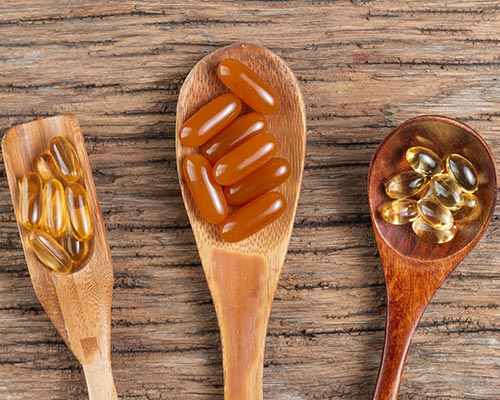
One common issue is leakage. Leakage may result from weak seals, inappropriate ribbon conditions, fill contamination at the sealing area, mechanical damage, or incompatibility between the fill and shell. The cause should be investigated across the entire process rather than attributed only to the encapsulation machine.
Shell deformation can occur when capsules remain too soft after drying or when environmental conditions allow the shell to absorb moisture. Excessive heat during storage may also change capsule shape, particularly when the fill becomes more fluid.
Brittleness is the opposite problem. A shell that becomes too dry can lose flexibility and may crack during handling. Ingredients inside the capsule may also influence moisture movement and gradually alter shell properties.
Surface stickiness can develop from incomplete drying, high environmental humidity, formula migration, or packaging conditions. Sticking should be evaluated together with shell moisture and storage environment rather than simply corrected through longer drying.
Variations in fill weight may originate from unstable fill viscosity, suspended-particle settling, dosing-system changes, or equipment adjustments. In a suspension formula, poor uniformity can create both weight variation and ingredient-distribution problems.
Air bubbles in the finished softgel may indicate air incorporation during fill preparation or pumping. Deaeration and controlled transfer can help reduce this problem, but excessive processing should also be avoided.
Packaging Soft Gelatin Capsules
Packaging plays a direct role in maintaining the physical condition of soft gelatin capsules. The shell can respond to changes in humidity, temperature, light, oxygen exposure, and contact with packaging materials.
Bottle systems are commonly used when multiple softgels are stored together. The bottle, closure, liner, seal, headspace, and any moisture-control components should be considered as a complete system. The container should also provide enough space to avoid excessive mechanical pressure on the capsules while limiting unnecessary movement.
Blister packaging separates individual softgels and can reduce repeated exposure of the remaining units after one cavity is opened. However, barrier performance depends on the actual materials used and the sealing process. A blister should therefore be selected according to the finished product rather than appearance alone.
Softgel packaging should also be evaluated for physical compatibility. Capsules can rub against one another or against the container during transport, which may create surface marks if the shell is too soft or if the package allows excessive movement.
Light-sensitive fills may require additional package protection, while oxidation-sensitive oils may place greater emphasis on oxygen barrier and closure performance. No single package configuration is ideal for every soft gelatin capsule formulation.
The intended commercial package should be included in stability evaluation because an unpackaged capsule can behave differently from the same softgel stored in its final container.
Stability Evaluation for Soft Gelatin Capsules
Stability evaluation should examine the entire softgel system over time rather than focusing only on the internal ingredient.
The shell should be observed for hardness changes, softness, stickiness, cracking, discoloration, deformation, leakage, and surface changes. The fill should be evaluated according to its own specifications, including appearance, uniformity, and relevant analytical parameters.
The relationship between the fill and shell is particularly important. A product may remain visually acceptable while moisture or formulation components gradually migrate between the two phases. Changes in shell texture or fill consistency can therefore provide useful information about compatibility.
Packaging should be included in the same evaluation. Seal integrity, container condition, capsule movement, label condition, and any interaction between the package and softgel should be documented at defined intervals.
Temperature and humidity conditions should reflect the approved stability plan. Accelerated conditions may help reveal potential formulation weaknesses, but the results should be interpreted according to the established study design rather than used as a simple prediction without context.
The objective of stability work is to confirm that the formula, shell, process, and package continue to behave within defined specifications throughout the intended storage period.
Soft Gelatin Capsules vs Other Dosage Formats
Soft gelatin capsules have advantages for certain formulation structures, but they are not automatically the appropriate choice for every ingredient.
Oil-based materials and compatible liquid formulations often fit naturally into a softgel because the fill can remain enclosed in a sealed unit. Dry powders, granules, and many mineral-rich formulations may fit more naturally into hard capsules or tablets.
A product that requires a large quantity of dry material may become impractical as a softgel suspension because particle loading can increase viscosity and settling risk. Conversely, converting an oil into a dry powder solely to fit a tablet or hard capsule can introduce unnecessary formulation complexity.
Dosage-form selection should therefore begin with the physical characteristics of the formula. Whether the material is an oil, solution, suspension, semi-solid, dry powder, or compressed blend provides a stronger technical basis for selection than appearance or market familiarity.
The most reliable format is the one that allows the formulation to be manufactured, tested, stored, and packaged consistently.
Developing a Soft Gelatin Capsules Product Specification
A clear specification should connect the shell, fill, manufacturing process, finished capsule, and packaging requirements.
The fill portion should identify the complete ingredient composition, target fill weight or volume, viscosity range, appearance, processing temperature, and any requirements for particle size or agitation. If the formulation is a suspension, the specification should also define acceptable settling behavior and the mixing conditions required during production.
The shell section should identify gelatin and plasticizer requirements, color or opacity, and any relevant physical characteristics. Capsule shape, dimensions, fill capacity, and tooling should also be documented.
Finished-product specifications can include appearance, fill consistency, seal integrity, dimensions, shell condition, moisture-related parameters, and packaging configuration.
Just as importantly, test methods should be clearly defined. A specification saying that a capsule should have “acceptable softness” provides little value unless the evaluation method is understood and repeated consistently.
Packaging materials, closure systems, coding, storage conditions, and retained-sample procedures should complete the technical file. This creates a standard that can be referenced during pilot production and future batches.
From Formula Development to Routine Production
A softgel project should normally progress from technical feasibility to pilot encapsulation and then to full-scale manufacturing.
Early formula work should determine whether the fill is compatible with a soft gelatin capsule at all. This stage examines solubility, suspension behavior, viscosity, temperature requirements, and expected shell interaction.
Pilot production is then used to assess how the formula behaves on representative encapsulation equipment. Issues such as pumping difficulty, uneven fill, air incorporation, seal contamination, deformation, or unexpected drying behavior may become visible only after the formula enters an actual production process.
Scale-up introduces larger tanks, longer transfer paths, longer holding times, and different equipment speeds. These changes can affect fill temperature, viscosity, suspension uniformity, and encapsulation consistency even when the ingredient composition remains unchanged.
Routine production should therefore be based on documented process ranges rather than a formula alone. Mixing time, holding conditions, fill temperature, machine settings, drying environment, inspection frequency, and packaging conditions all contribute to batch repeatability.
Conclusion
Soft gelatin capsules are more than flexible shells filled with oil. They are integrated formulation systems in which gelatin, plasticizer, moisture, fill composition, viscosity, encapsulation conditions, drying, and packaging must remain compatible.
The most important development decision is whether the proposed fill is technically suitable for a softgel format. Once compatibility is established, the formulation team can optimize shell properties, fill viscosity, capsule dimensions, sealing, drying, and packaging around the specific product.
Quality should be built into every stage rather than evaluated only after production. Raw-material specifications, in-process monitoring, fill-weight control, seal inspection, drying records, stability evaluation, and batch traceability all help create a repeatable manufacturing process.
When the shell, fill, process, and package are treated as one connected system, soft gelatin capsules can be developed with greater consistency across pilot work, scale-up, and routine production.
FAQ
What are soft gelatin capsules made of?
Soft gelatin capsules normally use a flexible shell containing gelatin, water, and a plasticizer, with optional color or opacity components depending on the specification. The internal fill may contain oils, liquid blends, suspensions, or selected semi-solid formulations that are compatible with the shell.
What can be filled into soft gelatin capsules?
Softgels are commonly used for oils and compatible liquid formulations. Selected suspensions and semi-solid fills may also be possible when viscosity, particle size, temperature, uniformity, and shell compatibility are controlled. Not every liquid is automatically suitable for softgel encapsulation.
Why can soft gelatin capsules become sticky or brittle?
Shell properties can change when moisture moves between the capsule, fill, package, and surrounding environment. Excess moisture may contribute to softness or stickiness, while excessive moisture loss may increase brittleness. Formula compatibility and packaging should therefore be evaluated together.
How is the fill weight of soft gelatin capsules controlled?
The encapsulation system delivers a defined quantity of fill while the gelatin ribbons are formed and sealed. Fill viscosity, temperature, dosing equipment, machine settings, and suspension uniformity can influence consistency, so in-process checks should continue throughout the production run.
What packaging is suitable for soft gelatin capsules?
Bottles and blister systems are common options, but the correct package depends on the formula’s sensitivity to moisture, oxygen, light, temperature, and physical handling. The finished softgel should be evaluated in the intended package as part of stability testing.