


Table of Contents
Introduction

The search term Cymbiotika Vitamin C usually reflects interest in a branded liposomal liquid rather than a conventional tablet, capsule, or powder. It also raises broader questions about how liquid vitamin formulas are structured, stabilized, flavored, filled, tested, and packaged.
Cymbiotika is an independent brand. This article does not claim affiliation, authorization, formula equivalence, or a manufacturing relationship with that company. Instead, it uses the search topic as a starting point for explaining the technical principles behind liposomal vitamin C liquids.
A liquid formula must remain uniform from the first production trial through filling and storage. Its ingredients, phospholipid system, pH, viscosity, flavor, oxygen exposure, packaging, and processing conditions must work together.
Keju Health’s liquid formulation and manufacturing services cover formulation development, flavor adjustment, stability evaluation, controlled filling, and packaging integration for vitamin and mineral liquids.
This guide explains:
- What the term liposomal means in liquid formulation
- How vitamin C source selection affects the formula
- Why phospholipid dispersion requires process control
- How pH influences taste and stability
- Why air, light, and temperature must be managed
- How flavor and texture are developed
- Which filling and packaging factors matter
- What should be examined during stability testing
- How liposomal liquids compare with other formats
Understanding the Cymbiotika Vitamin C Search Term
Cymbiotika Vitamin C is a brand-specific keyword. It differs from general terms such as liquid vitamin C, liposomal liquid formulation, or vitamin C manufacturing.
Someone using this phrase may be trying to understand:
- What makes a liquid formula liposomal
- Which vitamin C forms can be used
- Why phospholipids appear in the formula
- How the liquid remains uniform
- What creates its texture
- How flavor is balanced
- Why the product is stored in individual or sealed packaging
- Which quality records are relevant
- How a similar dosage format can be developed without copying a brand
Useful content should address these technical questions without repeating promotional statements or making unsupported comparisons.
Brand Research and Formula Development Are Different
Reviewing an existing product can reveal common market expectations, including dosage format, texture, flavor direction, packaging style, and ingredient presentation.
However, a new formula should not be created by duplicating another company’s label or appearance.
An original liquid vitamin formula requires its own:
- Ingredient specification
- Vitamin C source
- Phospholipid system
- Target concentration
- Flavor profile
- Viscosity range
- pH range
- Processing method
- Packaging structure
- Test plan
- Stability program
- Batch documentation
The finished product should be developed from a clear technical specification rather than visual similarity.
What Is a Liposomal Vitamin C Liquid?
A liposomal liquid contains phospholipid-based structures dispersed through a liquid phase. These structures are created through controlled formulation and processing rather than by simply mixing oil and water.
The word liposomal is related to liposomes, which are small structures formed from phospholipids. Phospholipids contain both water-compatible and oil-compatible regions, allowing them to organize into layers when processed under suitable conditions.
In a liquid vitamin C formula, the complete system may contain:
- A vitamin C source
- Water or another approved liquid phase
- Phospholipids
- Texture-controlling ingredients
- Acidity-adjusting ingredients
- Flavor materials
- Sweetening ingredients
- Oils or extracts
- Color components
- Processing-support ingredients
The exact structure depends on the product specification and production method.
Liposomal Is a Formulation Description
The word liposomal describes a delivery structure. It does not automatically confirm particle size, uniformity, long-term stability, or production consistency.
A technically credible formula should define:
- The phospholipid source
- The amount of phospholipid used
- The mixing sequence
- The processing conditions
- The expected particle distribution
- The liquid’s visual standard
- Its pH and viscosity
- The approved package
- Its storage behavior
Without these details, the word liposomal provides limited information about the actual manufacturing process.
Liposomal Liquids Are Not Simple Solutions
A true solution contains ingredients dissolved at a molecular level. A liposomal liquid is generally a structured dispersion.
This distinction matters because a dispersion can change through:
- Particle growth
- Aggregation
- Separation
- Sedimentation
- Surface oil formation
- Viscosity drift
- Interaction with flavors
- Interaction with packaging
The stability plan should reflect the actual formula structure.
Selecting the Vitamin C Source
Vitamin C can be introduced through different ingredient forms. Each form may influence pH, flavor, concentration, solubility, and processing behavior.
The broader term vitamin C commonly refers to ascorbic acid and related forms used in formulated products.
Ascorbic Acid
Ascorbic acid is water-soluble and naturally acidic.
In a liquid formula, it may influence:
- Final pH
- Sourness
- Flavor balance
- Ingredient compatibility
- Color stability
- Packaging selection
- Storage behavior
A high concentration can create a strong acidic profile that requires careful sensory development.
Mineral Ascorbates
Mineral ascorbates combine ascorbate with a mineral component. They may create a different pH and sensory profile from ascorbic acid.
Their inclusion can also affect:
- Mineral content
- Formula density
- Salt balance
- Flavor
- Ingredient interaction
- Label composition
- Analytical testing
Several vitamin C forms may be combined when the formula has a clear technical reason for doing so.
Botanical Ingredients Containing Vitamin C
Fruit powders and extracts may be included alongside standardized vitamin C ingredients.
These materials can add:
- Natural color
- Aroma
- Acidity
- Fine particles
- Botanical flavor
- Batch variation
- Insoluble material
A botanical powder should not be treated as identical to a standardized vitamin ingredient. Each material requires its own identity and quality specification.
Define the Source Clearly
The product specification should identify:
- The ingredient name
- The material source
- The concentration
- The amount per serving
- The analytical method
- The acceptable tolerance
- The raw-material batch
- The storage conditions
Clear source information allows the same formula to be reproduced consistently.
How Phospholipid Systems Work
Phospholipids are central to liposomal liquid design. Their behavior depends on source, composition, concentration, temperature, mixing energy, and surrounding ingredients.
Phospholipid Structure
A phospholipid contains a region that interacts more readily with water and another region that interacts with oil-like materials.
Under suitable conditions, phospholipids can organize into layered structures within a liquid.
However, this organization does not occur identically in every formula. Changes in pH, salts, oils, flavors, or processing energy can alter the final dispersion.
Phospholipid Source
Different phospholipid materials may vary in:
- Composition
- Purity
- Color
- Aroma
- Viscosity
- Moisture
- Oxidation sensitivity
- Processing behavior
- Ingredient declaration
The selected source should match the formula’s technical and labeling requirements.
Concentration
Using more phospholipid does not automatically create a more stable formula.
An excessive amount may produce:
- Heavy texture
- Increased viscosity
- Stronger raw-material aroma
- Difficult pumping
- Difficult filling
- Surface residue
- Packaging interaction
An insufficient amount may fail to create the intended dispersion structure.
The appropriate level should be established through development trials.
Hydration
Phospholipids may require controlled hydration before final homogenization.
Hydration can be influenced by:
- Water temperature
- Mixing speed
- Mixing time
- Addition sequence
- pH
- Salt level
- Other oils
- Thickening ingredients
Incomplete hydration can lead to visible particles, uneven texture, or separation.
The Role of Homogenization
Homogenization applies controlled mechanical energy to reduce dispersed particle size and improve distribution through the liquid.
It is a key stage in many liposomal liquid processes.
Mixing and Homogenization Are Not the Same
General mixing distributes ingredients through a vessel. Homogenization applies higher shear or pressure to alter the structure of the dispersed phase.
A formula may appear mixed without having a controlled particle distribution.
The process specification should distinguish between:
- Initial blending
- Phospholipid hydration
- Pre-emulsification
- Homogenization
- Final flavor blending
- Deaeration
- Transfer to filling
Each stage has a different purpose.
Homogenization Variables
Important process variables may include:
- Equipment type
- Rotor speed
- Pressure
- Processing time
- Number of passes
- Batch temperature
- Batch volume
- Flow rate
- Holding time
- Cooling conditions
These variables should be recorded so the process can be repeated.
Excessive Processing
More processing energy is not always desirable.
Excessive homogenization may create:
- Temperature increase
- Aroma loss
- Foam
- Air incorporation
- Viscosity changes
- Ingredient stress
- Equipment wear
- Unexpected particle behavior
The process should use enough energy to reach the defined target without unnecessary exposure.
Why pH Matters in Liposomal Vitamin C
pH affects flavor, ingredient compatibility, color, viscosity, phospholipid behavior, and storage stability.
It should be measured during development, production, filling, and stability evaluation.
pH and Flavor
Ascorbic acid creates a naturally acidic environment. This can work well with citrus, berry, or other tart flavor profiles, but the balance must remain controlled.
A liquid that is too acidic may taste sharp. Increasing sweetness alone may create a heavy finish without resolving the acidic sensation.
Flavor development should coordinate:
- Acidity
- Sweetness
- Aroma
- Viscosity
- Aftertaste
- Serving volume
pH and Ingredient Compatibility
Other materials may change the pH or respond differently as the pH moves.
Potential changes include:
- Cloudiness
- Precipitation
- Color drift
- Texture change
- Aroma change
- Phospholipid aggregation
- Container interaction
Testing ingredients individually does not reveal every interaction within the final blend.
Buffering Capacity
Some formulas resist pH adjustment because their ingredients create buffering capacity.
Adding a small amount of acid or alkaline material may produce little change at first, followed by a larger shift after a certain point.
The pH-adjustment procedure should specify:
- Adjustment ingredient
- Dilution method
- Addition rate
- Mixing time
- Resting time
- Measurement temperature
- Final acceptable range
Managing Air, Light, and Temperature
Vitamin C liquids and phospholipid-containing dispersions can change when exposed to uncontrolled air, light, or temperature.
Managing these factors requires a complete process rather than one single ingredient.
Air Exposure
Air can enter the formula during:
- Powder addition
- High-speed mixing
- Pumping
- Homogenization
- Tank transfer
- Filling
- Package headspace
Excessive air may contribute to foam, color drift, aroma changes, or instability.
The production process may require controlled mixing and deaeration before filling.
Foam
Foam can affect:
- Fill accuracy
- Headspace
- Container cleanliness
- Line speed
- Visual consistency
- Package sealing
Reducing foam should begin with equipment and process review. Adding another formula ingredient should not be the first response to unnecessary air incorporation.
Light Exposure
Certain formula components can change during extended light exposure.
The stability plan should evaluate:
- Production-area exposure
- Transparent transfer lines
- Holding vessels
- Filling-line exposure
- Package color
- Secondary cartons
- Storage instructions
A dark package may reduce exposure, but its performance should still be confirmed with the finished product.
Temperature
Temperature can affect:
- Phospholipid hydration
- Viscosity
- Flavor release
- Pumping
- Homogenization
- Particle distribution
- Container dimensions
- Storage stability
The formula should have defined processing and storage ranges.
Flavor and Texture Development
Liposomal liquids often have a thicker texture than conventional water-based vitamin drinks. Phospholipids, glycerin-like materials, botanical powders, and stabilizers may all influence mouthfeel.
Base Flavor Assessment
Before selecting a flavor, the development team should evaluate the unflavored base for:
- Acidity
- Bitterness
- Phospholipid aroma
- Botanical notes
- Oil-like notes
- Sweetness
- Viscosity
- Lingering texture
A successful flavor should be built around the actual base rather than a simplified sample.
Flavor Direction
Citrus, berry, vanilla, tropical, or mixed fruit profiles may be considered depending on the formula.
The final choice should account for:
- Acid level
- Natural ingredient color
- Phospholipid aroma
- Serving size
- Texture
- Packaging
- Storage behavior
The strongest aroma is not always the most balanced option.
Sweetness
Sweetness can soften acidity but may also intensify aftertaste when the liquid has a thick texture.
The sensory evaluation should consider:
- First taste
- Mid-palate balance
- Texture during use
- Lingering sweetness
- Interaction with botanical materials
- Flavor after storage
Texture
Texture should be defined through measurable and sensory standards.
Possible descriptions include:
- Free-flowing
- Syrup-like
- Smooth
- Slightly viscous
- Gel-like
- Uniformly dispersed
Terms such as “smooth” should be connected to practical criteria, including absence of coarse particles, acceptable pour behavior, and consistent filling.
Supporting Ingredients and Their Functions
A liposomal vitamin C liquid may require supporting ingredients to control texture, flavor, particle distribution, and processing.
Each supporting material should have a defined purpose.
Texture-Control Ingredients
Texture-control ingredients may help create consistent viscosity or reduce rapid separation.
Their performance can depend on:
- Hydration time
- Mixing energy
- pH
- Minerals
- Temperature
- Addition sequence
Too much can make the product difficult to pump or fill.
Flavor Carriers
Flavor materials may be water-soluble, oil-soluble, powdered, emulsified, or carried in another liquid.
Oil-soluble flavors may interact with the phospholipid system differently from water-soluble flavors.
The complete flavor should be tested after homogenization rather than only in a hand-mixed sample.
Acidity-Adjusting Ingredients
Acids may refine flavor and pH. Mineral salts may shift acidity or introduce a different sensory profile.
These adjustments should be made gradually because they can affect more than taste.
Botanical Powders and Extracts
Botanical ingredients can contribute natural color and aroma, but they may also introduce fine particles or sediment.
The specification should define whether the final product is expected to be:
- Uniformly opaque
- Slightly cloudy
- Free from coarse sediment
- Easily redispersed
- Naturally variable within an approved range
Manufacturing Sequence
The order in which ingredients are combined can significantly affect a liposomal liquid.
A representative process may include:
- Preparing the main liquid phase
- Adjusting the initial temperature
- Hydrating selected texture ingredients
- Introducing the vitamin C source
- Preparing the phospholipid phase
- Combining the phases
- Conducting pre-mixing
- Applying homogenization
- Adding sensitive flavors
- Adjusting pH
- Confirming final volume
- Reducing excess air
- Holding under controlled conditions
- Filling and sealing
The actual sequence must be developed for the specific formula.
Addition Speed
Adding powder too quickly can create clumps. Introducing oil-based material too rapidly can produce an uneven dispersion.
The process record should identify addition rate where it influences repeatability.
Holding Time
The maximum time between final mixing and filling should be defined.
During holding, the formula may experience:
- Temperature change
- Sedimentation
- Foam release
- pH drift
- Viscosity change
- Particle aggregation
- Aroma loss
The formula should remain within specification throughout the approved holding period.
Filling and Packaging
The selected package must work with the liquid’s viscosity, serving volume, light sensitivity, and intended use method.
Individual Pouches
Single-serving pouches can divide the formula into defined portions.
The packaging process should control:
- Fill quantity
- Seal area cleanliness
- Seal temperature
- Pouch dimensions
- Material compatibility
- Leakage
- Coding
- Handling strength
A viscous liquid can contaminate the seal area when nozzle timing is not properly controlled.
Bottles
Bottle systems may be used for multi-serving or measured liquid formats.
The complete system may include:
- Bottle
- Closure
- Liner
- Inner seal
- Measuring component
- Label
- Secondary carton
Compatibility should be evaluated with the finished liquid.
Package Material
Package materials differ in their resistance to:
- Light
- Oxygen
- Moisture
- Impact
- Flexing
- Oil migration
- Aroma transfer
Material selection should be based on formula testing rather than appearance alone.
Headspace
Headspace is the area between the liquid and the package closure.
It can affect:
- Air exposure
- Package appearance
- Liquid movement
- Filling consistency
- Leakage risk
The target fill quantity and package volume should be developed together.
Quality Control for Liposomal Vitamin C Liquids
Quality control should cover raw materials, production parameters, liquid properties, packaging, and storage behavior.
| Quality Area | Typical Evaluation | Main Purpose |
|---|---|---|
| Raw-material identity | Specification and batch verification | Confirms the approved ingredients |
| Vitamin C content | Defined analytical method | Confirms formula composition |
| Phospholipid material | Identity and composition records | Confirms the dispersion component |
| Appearance | Color, uniformity, and visible particles | Maintains the visual standard |
| pH | Defined target and range | Monitors formula environment |
| Viscosity | Controlled measurement | Supports texture and filling |
| Particle distribution | Approved analytical method | Reviews dispersion consistency |
| Specific gravity | Density measurement | Supports identity and filling |
| Fill quantity | In-process checks | Maintains package consistency |
| Package seal | Leakage and seal inspection | Confirms closure performance |
| Flavor | Controlled sensory evaluation | Maintains sensory consistency |
| Coding | Batch and date verification | Maintains traceability |
The exact test plan should match the product specification and manufacturing process.
Particle Size Is Only One Measurement
A small particle-size result does not automatically confirm complete formula quality.
The result should be evaluated alongside:
- Distribution range
- Aggregation
- Appearance
- Viscosity
- pH
- Storage change
- Test method
- Sample preparation
One average number may hide a broad or unstable particle distribution.
Batch-Specific Records
A general raw-material document does not replace information connected to the actual production batch.
Traceability should connect:
- Raw-material lots
- Weighing records
- Mixing records
- Homogenization settings
- In-process results
- Filling records
- Packaging materials
- Finished-product results
- Retained samples
Stability Evaluation
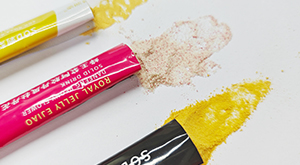
Stability evaluation examines how the liquid and package change under defined conditions.
A newly produced sample may look uniform while still developing changes later.
Physical Stability
Physical observations may include:
- Color
- Clarity
- Uniformity
- Sediment
- Surface layer
- Separation
- Viscosity
- Foam
- Crystals
- Container staining
- Leakage
Observations should use approved reference standards where possible.
Chemical Stability
The analytical plan may examine:
- Vitamin C content
- pH
- Selected formula markers
- Phospholipid-related specifications
- Flavor components where relevant
- Color-related changes
The test method and acceptance range should be defined before the study begins.
Particle Stability
Particle distribution may change even when the liquid still appears acceptable.
Possible changes include:
- Aggregation
- Particle growth
- Wider distribution
- Sedimentation
- Surface material
Measurements should be taken at defined intervals using consistent sample preparation.
Sensory Stability
Flavor and texture can change during storage.
The evaluation may examine:
- Aroma intensity
- Sourness
- Sweetness
- Phospholipid notes
- Botanical notes
- Viscosity perception
- Aftertaste
- Package-related aroma
Sensory samples should be handled consistently.
Packaging Stability
The intended package should be included in the study.
Packaging observations may include:
- Seal condition
- Leakage
- Delamination
- Pouch swelling
- Closure fit
- Label lifting
- Material softening
- Odor transfer
- Color changes
Testing the formula only in a laboratory container provides incomplete information.
Cymbiotika Vitamin C Format Compared With Other Forms
A liposomal liquid differs from tablets, powders, capsules, and conventional beverages in structure and manufacturing requirements.
| Format | Main Structure | Primary Development Focus | Common Technical Challenge |
| Liposomal liquid | Phospholipid dispersion | Particle and liquid stability | Aggregation or separation |
| Conventional liquid | Solution or suspension | Solubility and flavor | Precipitation or sediment |
| Tablet | Compressed dry blend | Flow and compression | Hardness or sticking |
| Effervescent tablet | Reactive compressed blend | Moisture and dissolution | Premature reaction |
| Powder | Dry blend | Flow and dispersion | Clumping or segregation |
| Hard capsule | Powder inside a shell | Fill and shell compatibility | Weight variation |
| Softgel | Liquid inside a sealed shell | Fill-to-shell compatibility | Leakage or deformation |
No format is automatically appropriate for every formula.
The selection should reflect ingredient behavior, serving structure, sensory requirements, packaging, manufacturing equipment, and stability goals.
Common Liposomal Liquid Problems
Visible Separation
A surface or lower layer may indicate insufficient homogenization, incompatible ingredients, an unsuitable phospholipid level, or particle growth.
The formula and process should be reviewed together.
Sediment
Sediment may originate from botanical powders, insoluble flavor materials, crystals, or aggregation.
The technical team should determine whether the sediment is an expected natural characteristic or an unacceptable change.
Excessive Thickness
A liquid may become too thick because of phospholipid concentration, texture ingredients, low temperature, prolonged hydration, or interaction between components.
Viscosity should be measured at a defined temperature.
Thin or Watery Texture
Insufficient structure may result from low phospholipid content, incomplete hydration, unsuitable homogenization, or instability during storage.
The correction should be based on the cause rather than automatically adding more thickener.
Sour or Harsh Flavor
Strong acidity may dominate the flavor system.
The development team should review vitamin C form, concentration, pH, sweetening balance, aroma, texture, and serving volume.
Foam During Filling
Foam may result from high-shear mixing, air entry during transfer, or unsuitable nozzle settings.
Process changes may be more effective than changing the formula.
Color Drift
Color changes may be associated with air, light, temperature, ingredient interaction, botanical variation, or packaging.
A visual reference range should be defined before production.
Seal Contamination
Viscous liquids can enter the pouch or bottle seal area.
Nozzle control, filling speed, package dimensions, and line cleaning should be reviewed.
Developing an Original Liposomal Vitamin C Formula
A clear development brief helps convert a product idea into a testable formula.
The brief may include:
- Target vitamin C source
- Amount per serving
- Serving volume
- Phospholipid preference
- Liquid texture
- Flavor direction
- Sweetness level
- Acidity preference
- Botanical components
- Color
- Pouch or bottle format
- Package volume
- Storage conditions
- Analytical requirements
- Sensory standards
- Stability plan
- Batch documentation
Start With Technical Feasibility
The first development samples should focus on:
- Ingredient compatibility
- Dispersion formation
- pH
- Viscosity
- Appearance
- Basic flavor balance
Decorative packaging and detailed branding should follow after the technical structure is workable.
Pilot Production
Pilot work may reveal issues that are not visible in hand-prepared samples.
These can include:
- Pumping difficulty
- Temperature increase
- Foam
- Particle variation
- Slow filling
- Seal contamination
- Sedimentation during holding
- Flavor loss
- Package interaction
Pilot approval should use predefined specifications.
Scale-Up
Full production introduces larger vessels, longer transfer lines, different mixing patterns, and longer holding times.
The scale-up plan should monitor:
- Addition sequence
- Mixing energy
- Temperature
- Homogenization settings
- pH
- Viscosity
- Holding time
- Fill quantity
- Seal integrity
- Package appearance
Questions to Address Before Production

Before a liposomal vitamin C liquid enters routine production, the technical team should address:
- Which vitamin C source is being used?
- What is the amount per serving?
- Which phospholipid material is selected?
- Is the formula a true dispersion rather than a basic mixture?
- Is the pH range defined?
- Is the viscosity range defined?
- Is the homogenization process documented?
- Is particle distribution being measured?
- Is the flavor evaluated in the final formula?
- Is air incorporation controlled?
- Is the maximum holding time defined?
- Is the filling equipment suitable for the viscosity?
- Has the package been tested with the liquid?
- Is the seal process validated?
- Is the stability plan complete?
- Are batch records and traceability requirements defined?
Clear answers reduce unexpected changes during scale-up.
Conclusion
The Cymbiotika Vitamin C search term reflects interest in a branded liposomal liquid, but the underlying formulation principles apply to many customized vitamin C products.
A reliable liposomal liquid begins with clearly identified vitamin C and phospholipid materials. It also requires controlled hydration, mixing, homogenization, pH adjustment, flavor development, air management, filling, packaging, and stability evaluation.
The word liposomal should not be treated as a complete quality standard. Particle distribution, viscosity, appearance, pH, package performance, and batch repeatability should all be defined and measured.
An original product should have its own formulation logic, technical specification, sensory profile, packaging system, and quality documentation. When these elements are developed together, the liquid becomes easier to manufacture consistently across future batches.
FAQ
What is Cymbiotika Vitamin C?
Cymbiotika Vitamin C refers to a branded liposomal vitamin C liquid. It is not a generic formula category. Technical evaluation should focus on its dosage format, ingredient declaration, phospholipid system, serving structure, texture, packaging, and available quality information.
What makes a vitamin C liquid liposomal?
A liposomal formula uses phospholipids processed into dispersed structures within a liquid. The term alone does not define particle size or stability. The phospholipid source, concentration, homogenization method, pH, viscosity, and storage results should also be documented.
Why is pH important in liposomal vitamin C?
pH influences acidity, flavor, color, phospholipid behavior, viscosity, and ingredient compatibility. The formula should have an approved pH range, a controlled adjustment process, and measurements taken during production and stability evaluation.
Can a liposomal vitamin C formula be customized?
Yes. The vitamin C source, phospholipid material, serving volume, viscosity, flavor, sweetness, acidity, botanical components, color, package format, and testing plan can be developed according to the product specification and manufacturing process.
Which packaging works with liposomal vitamin C?
Individual pouches and bottles may both be suitable. The selection depends on viscosity, serving format, light exposure, oxygen barrier, seal performance, and storage requirements. The complete formula should be tested in its intended package before approval.