

Table of Contents
Introduction
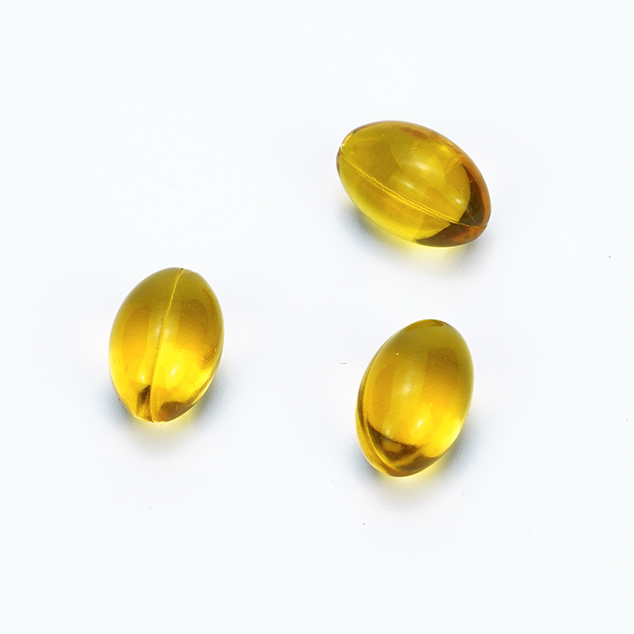
Fish oil and multivitamin products may look simple from the outside, but combining these two ingredient groups requires much more than placing several familiar ingredients into one package. Fish oil is an oil-based material that commonly contains EPA and DHA, while a multivitamin formula may include water-soluble vitamins, fat-soluble vitamins, minerals, carriers, and processing ingredients with very different physical properties.
These differences affect almost every stage of product development. Solubility, oxidation sensitivity, moisture behavior, particle size, dosage-form compatibility, fill volume, tablet dimensions, softgel shell performance, packaging, and storage all need to be considered before a final format is selected. In many cases, the most technically reliable design is not to force fish oil and every vitamin into one unit, but to separate the oil-based and dry components into dosage forms that better match their characteristics.
Keju Health’s fish oil softgel manufacturing capabilities provide a suitable platform for oil-based formulas, while its broader formulation and manufacturing services can support coordinated products that combine softgels with tablets or capsules. The key is to develop each component according to its own formulation needs before integrating them into one finished product concept.
What Does Fish Oil and Multivitamin Mean in Formulation?
The phrase fish oil and multivitamin can describe several different product structures. It may refer to a fish oil softgel paired with a separate multivitamin tablet, a softgel containing fish oil with selected oil-compatible vitamins, or a coordinated pack that combines multiple dosage forms in one daily format.
These approaches are not technically identical. Fish oil is a lipid-based ingredient, while multivitamin formulas often contain a mixture of ingredients with different solubility and processing behavior. Some vitamins can remain compatible with an oil phase, while others perform more predictably in a dry tablet or capsule.
This is why dosage-form selection should be based on ingredient behavior rather than appearance. A single-unit design may look simpler, but it can create unnecessary formulation compromises if water-soluble vitamins, dense mineral powders, and fish oil are forced into one softgel fill.
A stronger development strategy starts by asking which ingredients naturally belong together and which should remain physically separated.
Understanding Fish Oil as an Oil-Based Ingredient System
Fish oil is commonly associated with EPA and DHA, which are long-chain omega-3 fatty acids. From a manufacturing perspective, however, the most important questions involve oil identity, fatty-acid composition, oxidation control, viscosity, filling behavior, and storage conditions.
The fish oil specification should clearly define the material being used, the amount of oil per unit, the EPA and DHA content, the presence of any additional oil-phase ingredients, and the testing methods used to verify the batch. These values should be connected to production records rather than treated as general ingredient descriptions.
Fish oil also requires controlled handling because unnecessary exposure to air, heat, light, or prolonged open transfer can affect its condition. Mixing, pumping, holding, filling, encapsulation, and packaging should therefore be managed through defined process parameters.
For softgel production, the oil must also remain compatible with the shell. Changes to the fill composition can affect viscosity, sealing, shell condition, drying behavior, and storage performance. A fish oil formula that performs well on its own may need to be reassessed when new vitamins or other components are added.
Why Multivitamin Formulas Require a Different Approach
A multivitamin formula can contain a much wider range of raw materials than a fish oil fill. Water-soluble vitamins, fat-soluble vitamins, minerals, botanical ingredients, carriers, binders, lubricants, and coating materials may all appear in the same formulation.
These ingredients can differ significantly in bulk density, particle size, moisture sensitivity, color, odor, and compressibility. A formula that looks manageable on paper can become difficult to produce once the real powder volume, flow behavior, and tablet dimensions are evaluated.
Minerals are especially important because they may occupy substantial physical volume and can influence taste, tablet hardness, color, and moisture behavior. Some vitamin powders are extremely fine, while others are carried on larger particles. If these materials are blended without considering particle-size distribution, segregation can occur during transfer and tablet compression.
A reliable multivitamin formula therefore needs a clear dry-processing strategy. Blend uniformity, granulation requirements, powder flow, tablet compression, capsule filling, and moisture control should all be evaluated before the final dosage form is approved.
Can Fish Oil and Multivitamin Ingredients Be Put Into One Softgel?
Selected vitamins can sometimes be formulated with fish oil inside one softgel, particularly when the ingredients are compatible with an oil-based system. However, this should not be interpreted to mean that a complete multivitamin formula can simply be added to fish oil.
A softgel fill needs to remain pumpable, uniform, stable, and compatible with the shell. If dry particles are added to oil, the formula may become a suspension rather than a true solution. This introduces additional concerns related to settling, particle size, fill uniformity, and viscosity.
If suspended particles settle too quickly during production, the first and last softgels in a batch may not receive the same distribution of solids. The filling system may require controlled agitation, defined holding times, and suitable particle-size limits to maintain consistency.
Viscosity is another important factor. A fill that becomes too thick may be difficult to move through pumps and dosing equipment, while a fill that remains too thin may allow suspended particles to settle rapidly. The correct range needs to support both processing and formulation stability.
Shell compatibility must also be reevaluated whenever the fill composition changes. New ingredients can affect softgel drying, surface condition, seal integrity, leakage risk, and storage behavior. For this reason, combining fish oil and multivitamin ingredients in one softgel should be based on testing rather than convenience.
Why Separate Softgel and Tablet Formats Often Work Better
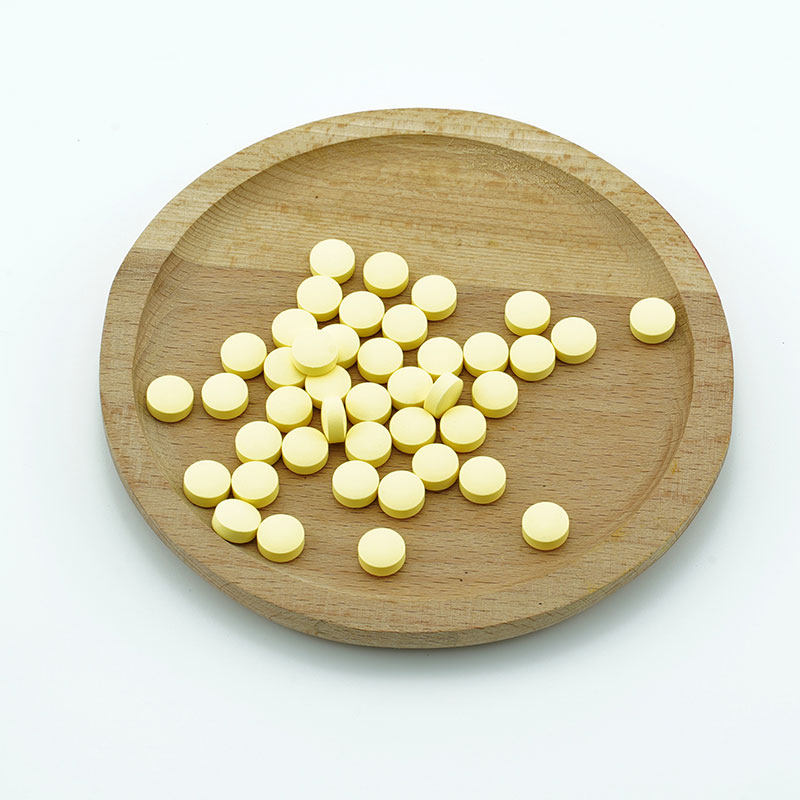
For many fish oil and multivitamin formulations, separating the oil-based and dry ingredients creates a more controllable product structure. The fish oil can remain in a softgel, while vitamins and minerals that perform better as powders can be placed into a tablet or hard capsule.
This approach allows each dosage form to be optimized independently. The softgel can be developed around oil handling, EPA and DHA specification, oxidation control, fill viscosity, shell compatibility, and drying conditions. The multivitamin tablet can focus on powder flow, granulation, hardness, friability, weight consistency, and moisture stability.
Separating the two systems can also improve development flexibility. If the tablet formula needs to be adjusted because of compression or particle-size issues, the fish oil fill may remain unchanged. Similarly, changes to the fish oil specification do not automatically require the entire multivitamin blend to be reformulated.
A coordinated multi-format product can therefore be technically simpler than forcing every ingredient into a single unit.
Fat-Soluble and Water-Soluble Vitamins Need Different Formulation Logic
One of the most important principles in fish oil and multivitamin development is that vitamins do not all behave the same way.
Fat-soluble vitamins may be considered for oil-based systems when their form, concentration, and carrier are compatible with the fish oil fill. Their solubility, color, oxidation sensitivity, analytical method, and interaction with the softgel shell should still be evaluated before final approval.
Water-soluble vitamins generally require a different environment. Adding water-compatible ingredients directly into an oil phase can create poor dispersion, sediment, or unstable suspensions unless the formula is specifically engineered to manage these differences.
Mineral ingredients introduce another layer of complexity. Many minerals are dense, insoluble powders that do not naturally remain suspended in fish oil. Even when a suspension can technically be created, the manufacturer must control particle size, viscosity, agitation, and filling conditions.
For complex formulations, separating water-soluble vitamins and minerals from the fish oil often provides a more reliable manufacturing structure.
Fish Oil and Multivitamin Dosage Form Comparison
The following table summarizes the main development considerations for several common product structures.
| Product Format | Most Suitable Ingredient Type | Main Manufacturing Focus | Main Technical Challenge |
|---|---|---|---|
| Fish oil softgel | Oils and compatible oil-phase ingredients | Fill stability and shell compatibility | Oxidation and fill consistency |
| Multivitamin tablet | Compressible vitamin and mineral blends | Flow, granulation, and compression | Large ingredient volume |
| Hard capsule | Dry powders and granules | Filling consistency and shell compatibility | Limited internal volume |
| Softgel + tablet | Oil phase plus dry vitamin/mineral phase | Independent process control | Coordinating two dosage forms |
| Softgel + capsule | Oil phase plus dry encapsulated blend | Unit consistency | Final package coordination |
| Multi-unit pack | Several dosage forms | Packaging organization | Component traceability |
No format is automatically superior. The correct choice depends on the actual ingredient list, serving structure, package design, and manufacturing requirements.
Managing Fish Oil Stability During Manufacturing

Fish oil stability depends on a sequence of controlled decisions rather than one isolated ingredient or process step. Raw-material storage, material transfer, tank holding, mixing, filling, encapsulation, and packaging all contribute to the final result.
The raw oil should be stored under conditions defined by its specification. Open-container handling should be minimized, and each batch should remain fully traceable throughout production. Transfer systems should be designed to reduce unnecessary agitation and prolonged exposure.
Temperature also matters because it affects oil viscosity and filling behavior. Controlled warming may sometimes support processing, but temperature should remain within the approved process range and should not be used as a general solution for poor equipment performance.
A formula may also include ingredients intended to support oil stability, but these do not replace suitable storage, controlled handling, or protective packaging. The complete process should be designed so that the fish oil remains within its approved specification from receipt through final filling.
Developing the Multivitamin Portion
The multivitamin component requires its own formulation strategy because dry ingredients can behave very differently during blending and compression.
Bulk density should be evaluated early. Two vitamin or mineral ingredients with similar weights can occupy very different volumes, which directly affects tablet size or capsule capacity. A formula containing many mineral ingredients may become physically larger than expected once the full blend is prepared.
Particle size also influences uniformity. When very fine powders are mixed with larger particles, the blend may separate during transfer or feeding into the tablet press. Granulation, pre-blending, milling, or controlled particle-size selection may be needed to reduce this risk.
Moisture control is another important part of the process. Some ingredients absorb moisture readily, which can affect flow, tablet hardness, color, or storage behavior. The manufacturing environment and packaging system should therefore be selected according to the sensitivity of the final blend.
The goal is to create a dry dosage form that can be reproduced consistently, not merely one that compresses successfully during the first trial.
Packaging Fish Oil and Multivitamin Together
Packaging must protect two ingredient systems that may have different sensitivities. Fish oil may require strong control of oxygen and light exposure, while a multivitamin tablet may require particular attention to moisture.
If both dosage forms are placed in the same bottle, the development team should evaluate direct contact between the softgel and tablet. Surface oils, tablet dust, moisture exchange, abrasion, odor transfer, and movement during transport can all affect the finished presentation.
A shared package should therefore be tested with the actual finished dosage forms rather than approved solely from material specifications.
Alternative configurations, such as individual blister compartments or coordinated unit packs, may reduce direct contact and allow each dosage form to retain its own physical environment. The best package is the one that protects the complete product under its intended storage conditions.
The package should also be included in stability evaluation. A formula stored in laboratory containers may behave differently once it is sealed in the final commercial configuration.
Quality Control for Fish Oil and Multivitamin Products
A combined product requires separate controls for the fish oil component and the multivitamin component, followed by final checks on the complete package.
The fish oil side may include identity, EPA and DHA composition, oil condition, fill weight, shell appearance, leakage inspection, and packaging integrity. The dry dosage form may require blend uniformity, tablet or capsule weight, hardness, friability, moisture, appearance, and selected ingredient testing.
Final packaging controls should confirm that the correct dosage forms are present in the approved quantity and configuration. Batch codes, package materials, labels, seals, and traceability records should link the final product back to each component batch.
This is especially important when softgels and tablets are manufactured separately before being combined. Traceability should connect the original raw materials, intermediate batches, finished dosage forms, and final packaging record into one complete history.
Stability Testing for a Combined Product
Fish oil and multivitamin formulations should be evaluated both independently and in the final package when multiple dosage forms are combined.
For the fish oil softgel, stability evaluation may consider shell appearance, leakage, fill condition, EPA and DHA results, odor, and packaging interaction. The multivitamin component may be reviewed for tablet hardness, moisture, appearance, selected vitamin or mineral markers, coating condition, and package interaction.
The combined package introduces additional questions. A tablet may absorb moisture from the surrounding environment, while the softgel shell may respond differently under the same conditions. Odor transfer, surface changes, abrasion, color transfer, and packaging integrity should therefore be observed throughout the study.
A softgel and tablet that are each stable in separate containers are not automatically proven compatible when stored together.
Common Fish Oil and Multivitamin Formulation Mistakes
One common mistake is assuming that a single dosage form is always simpler. In reality, forcing a large number of water-soluble vitamins, minerals, and fish oil into one softgel can create unnecessary problems with settling, viscosity, unit size, and shell compatibility.
Another mistake is comparing formulas only by total fish oil quantity. A technical fish oil specification should distinguish total oil from EPA and DHA and clearly define the measurement basis.
Multivitamin formulas can also become difficult when mineral volume is underestimated. A long ingredient list may appear compact on paper but require a much larger tablet once bulk density and processing ingredients are taken into account.
Packaging is another area that should not be delayed until the final stage. Oxygen, moisture, light, physical contact, and container movement can all change the performance of the finished product.
The most reliable development approach is to treat formulation, manufacturing, quality control, and packaging as one connected process.
A Practical Development Process
A fish oil and multivitamin project should begin with the complete ingredient list. Each material should be identified by its actual specification rather than a general ingredient name.
The ingredients can then be classified according to physical behavior. Oil-soluble materials may be considered for the softgel phase, while dry, water-soluble, or dense mineral ingredients may be more suitable for tablets or capsules.
Once the dosage forms are selected, each unit should be developed separately. The fish oil fill can be optimized for viscosity, oil stability, and shell compatibility, while the dry formula can be optimized for blend uniformity and compression.
Pilot production should confirm that both dosage forms behave consistently on representative equipment. Only after each unit is technically stable should the final package be evaluated.
This order reduces unnecessary reformulation because the technical foundation is established before visual packaging decisions become fixed.
What Should Be Defined Before Full Production?
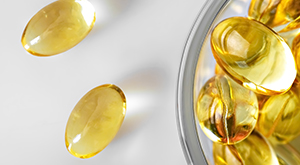
Before routine production begins, the formula should clearly define the fish oil specification, EPA and DHA levels, vitamin and mineral composition, dosage-form structure, unit dimensions, packaging configuration, testing plan, and storage requirements.
The technical team should also determine which ingredients are intended for the oil phase and which should remain in a dry format. If insoluble materials are suspended in fish oil, particle size, viscosity, and settling behavior should be validated.
For the multivitamin component, blend flow, tablet or capsule size, moisture limits, and unit consistency should be established through pilot work. The final package should then be tested with the actual dosage forms rather than empty packaging components.
When these specifications are documented before routine production, later batches can be evaluated against the same technical standard instead of relying on visual comparison alone.
Conclusion
Fish oil and multivitamin products require careful coordination between two different ingredient systems. Fish oil naturally fits an oil-based dosage form, while many vitamins and minerals perform more reliably in dry tablets or capsules.
Selected compatible ingredients may sometimes share a softgel fill, but the complete formula should be evaluated for solubility, viscosity, particle settling, oxidation, shell interaction, and storage stability before approval.
For more complex formulas, a softgel combined with a tablet or capsule often creates a clearer manufacturing structure. Each dosage form can be optimized independently and then integrated through a coordinated package.
The strongest fish oil and multivitamin product is not the one that places the greatest number of ingredients into a single unit. It is the one in which ingredient compatibility, manufacturing repeatability, testing, packaging, and stability are designed to work together from the beginning.
FAQ
Can fish oil and multivitamin ingredients be placed in the same softgel?
Selected oil-compatible vitamins may be combined with fish oil, but many multivitamin formulas also contain water-soluble vitamins and minerals. Solubility, viscosity, particle settling, shell compatibility, and storage stability should be evaluated before one softgel format is approved.
Why are fish oil and multivitamin ingredients often separated?
Fish oil is an oil-based material, while many vitamins and minerals are dry or water-soluble. Separating them into softgel and tablet or capsule formats allows each ingredient group to use manufacturing conditions better suited to its physical properties.
What should be checked in a fish oil softgel formula?
A complete specification should identify total fish oil, EPA, DHA, fill weight, additional oil-phase ingredients, viscosity, shell compatibility, storage conditions, testing methods, and packaging. These details should remain connected to the actual production batch.
Can minerals be added directly to fish oil?
Some mineral powders are insoluble in oil and may settle during holding or filling. A suspension requires controlled particle size, viscosity, mixing, and filling conditions. In many formulations, minerals are easier to manage in a separate tablet or capsule.
How should fish oil and multivitamin products be packaged?
The package should account for oxygen, light, moisture, direct contact, unit movement, and seal performance. Bottles, blisters, or coordinated unit packs may be used, but the final configuration should be evaluated with the actual finished dosage forms.