
Table of Contents
Introduction
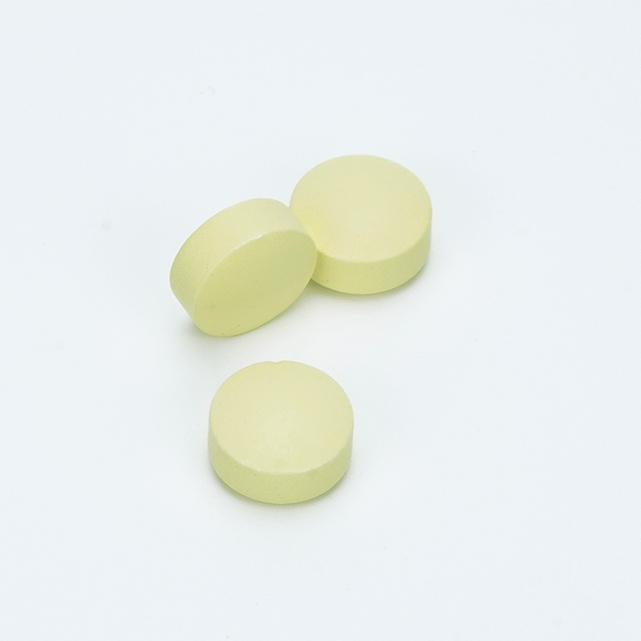
An effervescent tablet is designed to be placed in water before use. Once the tablet contacts water, its acid and alkaline components react, releasing carbon dioxide and helping the compressed tablet break apart and disperse.
Although the visible bubbling appears simple, producing a stable effervescent tablet requires careful control of ingredient compatibility, moisture, granule structure, compression force, flavor, dissolution behavior, and packaging.
Unlike a conventional tablet that remains intact until it is used directly, an effervescent tablet contains ingredients that are intentionally reactive. Even a small amount of uncontrolled moisture during production or storage can begin the reaction too early, affecting tablet hardness, appearance, dissolution, and package stability.
For this reason, the formula, production environment, compression process, and packaging should be developed as one connected system.
Keju Health’s tablet manufacturing solutions include formula development, granule evaluation, tablet compression, customized shapes, surface engraving, and packaging support for conventional, chewable, coated, multilayer, and effervescent tablet formats.
This guide explains how effervescent tablets work, how they are formulated, which manufacturing factors require close attention, and how stable performance can be maintained from production through storage.
What Is an Effervescent Tablet?
An effervescent tablet is a compressed solid format containing an acid component and an alkaline component. When the tablet is placed in water, these components dissolve and react, producing carbon dioxide gas.
The gas creates the familiar stream of bubbles while helping the tablet disintegrate and distribute its ingredients through the liquid.
A typical formulation may contain:
- One or more acid sources
- One or more alkaline sources
- Selected nutritional ingredients
- Fillers or carriers
- Binding materials
- Lubricants
- Flavors
- Sweetening ingredients
- Colors
- Flow-supporting ingredients
- Moisture-control components
Not every formula uses the same combination. The final composition depends on ingredient stability, target tablet size, flavor direction, dissolution time, water volume, packaging format, and production equipment.
The Acid Component
The acid portion provides hydrogen ions when dissolved in water. Common formulation options may include citric acid, tartaric acid, malic acid, or a controlled combination of suitable acids.
Each acid has a different influence on:
- Flavor sharpness
- Reaction speed
- Granulation behavior
- Moisture sensitivity
- Tablet hardness
- Final liquid pH
- Ingredient compatibility
The acid should be selected according to the complete formula rather than flavor preference alone.
The Alkaline Component
The alkaline portion commonly includes a carbonate or bicarbonate material. When dissolved in water, it reacts with the acid and produces carbon dioxide.
The quantity must be carefully balanced. Too little alkaline material may leave the prepared drink excessively acidic, while too much may create an undesirable taste or alter the final pH.
The balance should be calculated and then confirmed through pilot testing because other ingredients may also influence the reaction environment.
Why Carbon Dioxide Is Released
When the tablet enters water, the acid and alkaline components dissolve. Their reaction produces carbon dioxide, water, and dissolved salts.
The visible bubbles are therefore a result of the formula’s intended acid–base reaction.
This reaction serves several technical purposes:
- It helps break apart the compressed structure.
- It distributes ingredients through the water.
- It creates a recognizable preparation experience.
- It reduces the need to swallow a solid tablet.
- It allows the product to be prepared in a defined liquid volume.
The reaction should begin after contact with water, not during production or storage.
How an Effervescent Tablet Works in Water
The complete dissolution process occurs in several overlapping stages.
Water Enters the Tablet
Water first enters pores and small spaces within the compressed tablet. The speed of penetration depends on tablet density, granule structure, compression force, surface area, and ingredient solubility.
A tablet compressed too tightly may slow water entry. A tablet with insufficient strength may break during packaging or transport.
The formulation team must therefore balance mechanical stability with efficient dissolution.
The Reactive Ingredients Dissolve
The acid and alkaline components must enter the liquid phase before they can react.
Particle size, granulation, binder level, surface coating, and water temperature can influence how quickly this occurs.
If one component dissolves much faster than the other, the reaction may become uneven. This can produce localized residue, incomplete dispersion, or inconsistent bubbling.
Carbon Dioxide Forms
Once dissolved, the reactive components produce carbon dioxide gas. Bubbles move through the liquid and around the tablet surface.
The gas helps disrupt the tablet structure, but gas generation alone does not guarantee complete dissolution. Less-soluble ingredients may still remain suspended or settle after the main reaction has ended.
The Ingredients Disperse
After the tablet breaks apart, its ingredients may dissolve, disperse, or remain as fine suspended particles.
A clear final drink is not possible for every formula. Botanical powders, minerals, natural colors, or certain flavor materials may create controlled cloudiness or sediment.
The expected appearance should be defined during development so that normal formula behavior can be distinguished from instability.
Effervescent Tablets Compared With Other Formats
An effervescent tablet differs from conventional tablets, chewable tablets, powders, and ready-to-use liquids in both preparation and manufacturing requirements.
| Format | Preparation Method | Main Manufacturing Focus | Common Technical Concern |
|---|---|---|---|
| Effervescent tablet | Dissolved in water before use | Moisture control and reaction balance | Premature reaction |
| Conventional tablet | Used as a compressed solid | Hardness and disintegration | Slow or uneven breakdown |
| Chewable tablet | Chewed before use | Texture and flavor | Chalkiness or hardness |
| Powder sachet | Mixed with water | Flow and dispersion | Clumping or dust |
| Ready-to-use liquid | Used directly | Liquid stability and filling | Separation or sediment |
| Hard capsule | Used as a filled shell | Powder flow and shell compatibility | Fill variation |
| Softgel | Used as a sealed unit | Fill-to-shell compatibility | Leakage or deformation |
The most appropriate format depends on ingredient properties, preparation preference, serving volume, sensory design, manufacturing process, and packaging requirements.
An effervescent tablet may be suitable when a water-prepared format and visible dissolution process are important parts of the product concept.
Building the Acid–Base System
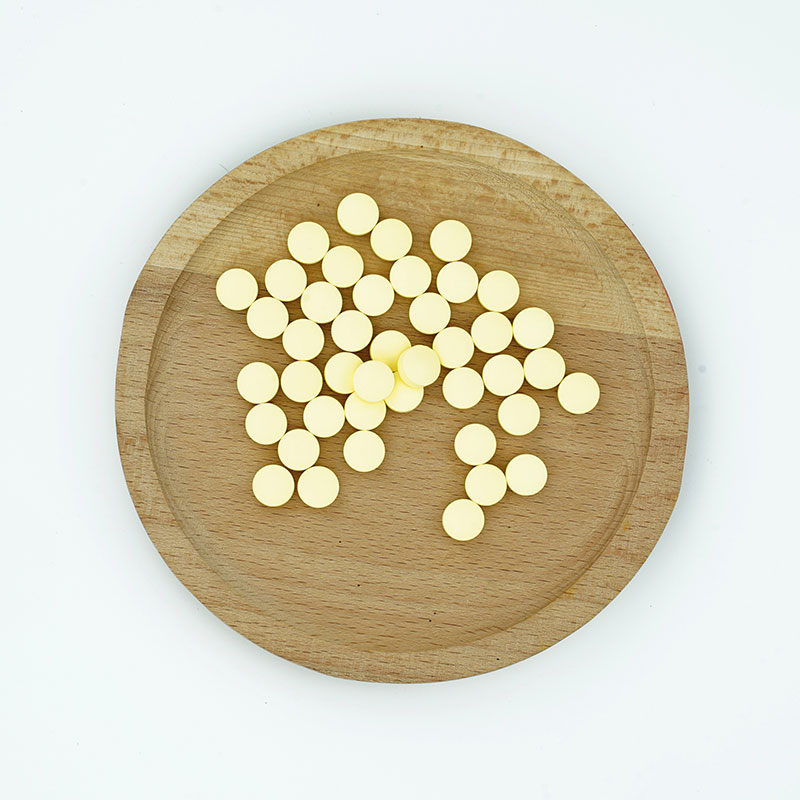
The acid–base system is the technical core of an effervescent tablet. It controls gas generation, flavor balance, final pH, and dissolution behavior.
Stoichiometric Balance
The formula should contain an appropriate relationship between acidic and alkaline components.
This relationship can be estimated through chemical calculation, but the final formula should also be evaluated through practical testing. Flavor ingredients, minerals, extracts, and other materials may influence the measured pH and sensory result.
A technically balanced reaction may still require adjustment for taste, tablet structure, or storage stability.
Single-Acid Systems
A formula may use one principal acid source.
This can simplify the ingredient system, but it may limit flexibility in flavor, granulation, compression, and dissolution.
The selected acid should be evaluated for hygroscopicity, particle behavior, compatibility, and final sensory profile.
Blended-Acid Systems
Two or more acids may be combined to create a more controlled formulation.
A blended system can help adjust:
- Flavor character
- Reaction speed
- Granule structure
- Tablet hardness
- Final pH
- Moisture behavior
- Dissolution profile
However, adding more components also increases formulation complexity. Each material should have a defined purpose.
Avoiding Excess Residual Acidity or Alkalinity
After the reaction is complete, the prepared liquid should remain within the approved pH and flavor range.
Excess residual acidity may create an overly sharp profile. Excess residual alkalinity may introduce an undesirable mineral-like or alkaline note.
The final liquid should be evaluated after the bubbles have largely subsided because pH and flavor perception may change during the reaction.
Ingredient Compatibility in an Effervescent Tablet
An ingredient may be stable in a capsule, powder, or conventional tablet but unsuitable for an effervescent system.
The formulation environment contains reactive acids, alkaline materials, concentrated particles, compression pressure, and high sensitivity to moisture.
Water-Soluble Ingredients
Water-soluble ingredients are generally easier to distribute in the prepared liquid, but high solubility can also increase moisture sensitivity during manufacturing.
Some materials may become sticky when exposed to humid air, affecting flow and compression.
Their behavior should be evaluated under realistic processing conditions rather than only in a sealed laboratory container.
Minerals
Minerals may influence taste, pH, color, solubility, and reaction speed.
Some mineral combinations may form visible sediment after dissolution. Others may interact with acids or create strong sensory notes.
The formula should define whether the final drink is expected to be clear, slightly cloudy, or suspended.
Botanical Ingredients
Botanical materials can introduce natural color, aroma, insoluble particles, and batch variation.
A finely milled botanical ingredient may disperse without fully dissolving. This does not necessarily indicate a formulation failure, but the appearance and settling behavior should remain within an approved standard.
Botanical materials should also be evaluated for moisture content because they can introduce water into an otherwise dry reactive system.
Flavor Materials
Flavor components may be supplied as powders, encapsulated particles, spray-dried materials, or liquid carriers.
Liquid flavors can be difficult to incorporate directly because they may introduce moisture or affect powder flow. Dry flavor systems are often more compatible, but they still require evaluation for compression, aroma retention, and dissolution.
Colors
Color should disperse evenly without forming spots in the tablet or uneven streaks in the prepared liquid.
The selected color should also remain compatible with the formula’s pH and storage conditions.
Natural color sources may show greater variation than standardized synthetic systems, so the acceptable visual range should be documented.
Moisture Control Is the Central Manufacturing Challenge
Moisture is one of the most important variables in effervescent tablet production.
The acid and alkaline ingredients are designed to react in water. Uncontrolled humidity can allow a limited reaction to begin before the tablet is intentionally dissolved.
What Premature Reaction Can Cause
Early moisture exposure may lead to:
- Powder clumping
- Reduced flow
- Granule softening
- Sticking during compression
- Uneven tablet surfaces
- Reduced hardness
- Tablet expansion
- Cracking
- Unusual odor
- Shorter or weaker bubbling
- Slow dissolution
- Package pressure changes
- Reduced storage consistency
These changes may develop gradually and may not be obvious immediately after production.
Raw-Material Moisture
Each ingredient can bring a different amount of moisture into the blend.
The production team should review:
- Incoming moisture specification
- Storage conditions
- Container closure
- Time exposed during weighing
- Material transfer method
- Preconditioning requirements
- Batch-to-batch variation
Materials that absorb moisture readily should remain open only for the minimum controlled period.
Environmental Humidity
The manufacturing environment should be suitable for moisture-sensitive powders.
Control may be required during:
- Weighing
- Sieving
- Granulation
- Blending
- Tablet compression
- Temporary storage
- Inspection
- Packaging
Protecting the formula only during compression is not enough if the materials were exposed earlier in the process.
Equipment Dryness
Mixers, granulators, transfer containers, tablet presses, and packaging equipment should be dry before contact with the blend.
Residual cleaning water can affect a localized part of the batch. Even limited contact may create clumps or initiate a reaction.
Cleaning and line-release procedures should therefore include dryness verification.
Granulation Methods for Effervescent Tablets
Granulation improves powder flow, reduces segregation, and helps create a blend suitable for consistent compression.
The selected method must avoid introducing uncontrolled moisture.
Dry Granulation
Dry granulation compacts powder without using a liquid binder system.
The compacted material is milled into granules and then blended with the remaining ingredients before final compression.
Advantages may include:
- Limited water exposure
- Improved powder flow
- Better particle-size distribution
- Reduced segregation
- Compatibility with moisture-sensitive formulas
However, excessive compaction may create hard granules that dissolve slowly.
Controlled Non-Aqueous Granulation
Some formulas may use a carefully selected non-water-based granulation system.
This approach requires detailed review of solvent compatibility, drying, residual limits, equipment, safety procedures, and formula behavior.
It should not be selected merely to imitate conventional wet granulation.
Separate Granulation
The acid and alkaline components may be processed separately before final blending.
Separating them can reduce direct contact during earlier processing stages and may improve storage stability.
The granules should still have compatible particle sizes and flow properties to reduce segregation after blending.
Direct Compression
Certain formulations may be suitable for direct compression when the ingredients already provide adequate flow and compactability.
Direct compression reduces processing steps, but the blend must remain uniform and feed consistently into the tablet press.
A formula that appears free-flowing in a small container may behave differently during a full production run.
Tablet Compression and Mechanical Strength
An effervescent tablet must be strong enough to survive production, packaging, transport, and normal handling. At the same time, it must allow water to enter and initiate dissolution efficiently.
Compression Force
Higher compression force often increases tablet hardness and reduces porosity.
If the tablet becomes too dense, water penetration may slow and dissolution may take longer.
If compression force is too low, the tablet may chip, crack, create dust, or break inside the package.
The correct setting should be established through production trials rather than chosen from hardness alone.
Tablet Thickness
Thickness can influence:
- Mechanical strength
- Dissolution time
- Package fit
- Tablet appearance
- Weight consistency
- Surface engraving
Thickness should be monitored during production because it may change when powder flow or compression force shifts.
Tablet Weight
Tablet weight is connected to formula quantity, serving design, dimensions, and dissolution behavior.
In-process weight checks help confirm that the tablet press is feeding consistently.
The sampling plan should continue throughout the run so that gradual equipment or flow changes can be identified.
Friability
Friability describes the tendency of tablets to chip or lose material during handling.
An effervescent tablet with excessive friability may create powder inside the tube or pouch. That loose powder has a larger exposed surface area and may react more readily with moisture.
Mechanical testing should therefore be connected to packaging and storage evaluation.
Surface Sticking
Acidic ingredients, flavors, sweetening materials, and moisture can contribute to sticking on tablet tooling.
Sticking may produce:
- Rough tablet faces
- Incomplete logos
- Material buildup
- Weight variation
- Interrupted production
- Darkened surface areas
Possible adjustments may involve granule moisture, lubricant choice, tooling condition, compression speed, or ingredient particle size.
Dissolution and Effervescence Performance
The performance of an effervescent tablet should be evaluated in a defined water volume under controlled conditions.
A simple statement such as “dissolves quickly” is not a sufficient technical specification.
Dissolution Time
Dissolution time can be influenced by:
- Water temperature
- Water volume
- Tablet size
- Tablet hardness
- Granule density
- Acid–base ratio
- Ingredient solubility
- Surface area
- Compression force
- Storage history
The test procedure should specify all relevant conditions so that results can be compared between batches.
Reaction Pattern
Two tablets may have similar total dissolution times but different reaction patterns.
One may produce an intense initial burst followed by slow residue dissolution. Another may show a steady reaction until the tablet has fully dispersed.
The preferred pattern depends on the formula and intended preparation experience.
Residue and Sediment
After the visible bubbling stops, the liquid should be checked for:
- Undissolved fragments
- Floating particles
- Foam
- Surface film
- Sediment
- Crystal formation
- Uneven color
- Unusual odor
Some formulas naturally contain suspended ingredients. The acceptable amount and appearance should be defined in the specification.
Final Liquid pH
The pH should be measured after the tablet has fully dispersed and the main reaction has subsided.
This result can provide information about acid–base balance and batch consistency.
However, pH alone does not confirm complete ingredient distribution or satisfactory sensory quality.
Flavor Development for Effervescent Tablets
Flavor is especially important because the complete formula is dispersed in water before use.
Acids, minerals, botanical materials, and sweetening ingredients all influence the sensory profile.
Acidity and Flavor Direction
The acid system naturally creates tartness. Citrus, berry, tropical, and other bright flavor directions may work well with this characteristic, but the choice should still reflect the base formula.
A flavor that performs well in plain water may behave differently when combined with minerals or botanical extracts.
Sweetness Balance
Sweetness should balance acidity without creating a heavy or lingering profile.
The development team should evaluate:
- Initial sweetness
- Mid-palate balance
- Aftertaste
- Interaction with acidity
- Mineral notes
- Aroma release during bubbling
- Flavor after the reaction ends
The prepared drink should be assessed over the full use period, not only during the first sip.
Aroma Release
Carbon dioxide movement can carry aroma compounds into the air. This may strengthen the initial aroma but also cause some notes to fade quickly.
Flavor selection should account for aroma during dissolution and after the liquid becomes still.
Masking Challenging Ingredients
Strong mineral, botanical, marine, or peptide notes may require several complementary techniques rather than one powerful flavor.
These may include:
- Acid balance
- Sweetness adjustment
- Encapsulated flavor materials
- Aroma layering
- Texture control
- Controlled ingredient selection
Flavor should support the formula without making unsupported statements about product performance.
Packaging for Effervescent Tablet Stability
Packaging is not a decorative final step. It is a central part of the moisture-control system.
An effervescent tablet can be stable after production but change rapidly if the package allows excessive moisture exposure.
Moisture-Barrier Requirements
The package should limit water vapor entering during storage.
Relevant components may include:
- Tablet tube
- Bottle
- Cap
- Liner
- Desiccant
- Foil pouch
- Blister material
- Heat seal
- Secondary carton
The complete configuration should be evaluated rather than reviewing each component independently.
Tablet Tubes
Tubes are commonly used because they can hold multiple tablets in a compact form.
A tube system may include a moisture-resistant body, a tight-fitting cap, and a desiccant component.
The cap should maintain closure performance after repeated opening and closing.
Individual Foil Pouches
Individual pouches separate tablets from one another and reduce repeated exposure of the remaining units.
The seal width, foil structure, tablet edges, and packaging process should be evaluated for punctures or incomplete seals.
Blister Packaging
Blister systems can isolate individual units, but the barrier level depends on the selected materials and sealing process.
A standard transparent blister may not provide the same moisture protection as a high-barrier structure.
Desiccants
A desiccant can help manage moisture within the closed package, but it does not correct an unsuitable package seal or excessively permeable material.
The amount and placement should be selected according to the complete package design and storage evaluation.
Opening and Closing Behavior
Multi-unit packaging should be assessed under realistic repeated-use conditions.
Each opening allows new air to enter. The remaining tablets should continue to meet their approved specifications throughout the intended period of use.
Quality Control During Production
Quality control for an effervescent tablet should include raw materials, granules, compressed tablets, packages, and prepared-liquid performance.
| Quality Area | Typical Evaluation | Main Purpose |
| Raw-material identity | Specification and batch verification | Confirms correct materials |
| Moisture level | Raw material and blend testing | Controls premature reaction risk |
| Granule flow | Flow and particle-size evaluation | Supports consistent compression |
| Blend uniformity | Representative sampling | Confirms ingredient distribution |
| Tablet weight | In-process measurements | Monitors press feeding |
| Hardness | Mechanical testing | Reviews handling strength |
| Thickness | Dimensional checks | Supports consistency and package fit |
| Friability | Controlled abrasion testing | Evaluates chipping tendency |
| Dissolution time | Defined water test | Confirms preparation performance |
| Final liquid pH | Measurement after dispersion | Reviews reaction balance |
| Appearance | Tablet and prepared liquid inspection | Confirms visual standard |
| Package seal | Closure and seal inspection | Supports moisture protection |
| Coding | Batch and date verification | Maintains traceability |
The exact testing plan should be based on the formula and approved product specification.
In-Process Sampling
Measurements should be taken at defined intervals throughout the production run.
Testing only the first tablets may not identify later changes caused by powder segregation, tooling buildup, equipment temperature, or altered material flow.
Retained Samples
Retained samples provide a reference for future review.
They should be stored under defined conditions and identified by batch and package configuration.
A retained tablet stored without its commercial package may not represent the actual product’s storage behavior.
Stability Evaluation
Stability evaluation should examine the tablet and its intended package over time.
Because the formula is moisture-sensitive, package performance is closely linked to tablet performance.
Physical Observations
The evaluation may include:
- Tablet hardness
- Surface appearance
- Chipping
- Cracking
- Swelling
- Discoloration
- Odor
- Sticking
- Powder formation
- Package deformation
These observations should use documented acceptance criteria rather than informal judgment.
Prepared-Liquid Performance
At each evaluation point, tablets may be tested for:
- Reaction start
- Bubble pattern
- Dissolution time
- Residue
- Sediment
- Color
- Aroma
- Final pH
- Flavor consistency
This helps identify changes that may not be visible while the tablet remains dry.
Package Performance
The package should also be reviewed for:
- Seal integrity
- Cap fit
- Liner condition
- Foil damage
- Desiccant condition
- Label adhesion
- Container deformation
- Evidence of moisture entry
Testing the tablet without its intended package provides incomplete information.
Temperature and Humidity Conditions
Defined temperature and humidity conditions can help reveal potential changes in the formulation and package.
Results should be interpreted according to the approved study design. Accelerated conditions can provide useful comparative information but should not be treated as an automatic substitute for longer-term evaluation.
Common Effervescent Tablet Problems
The Tablets React Inside the Package
This usually indicates uncontrolled moisture exposure.
Potential sources include raw materials, humid processing conditions, equipment residue, insufficient package barrier, an incomplete seal, or repeated opening.
The Tablet Dissolves Too Slowly
Possible causes include excessive compression, dense granules, low porosity, unsuitable binders, large tablet dimensions, or limited ingredient solubility.
The team should evaluate both formulation and press settings.
The Tablet Breaks During Handling
Low mechanical strength may result from insufficient compression, weak granules, unsuitable binders, poor particle-size distribution, or tablet geometry.
Increasing compression force without further testing may create a new dissolution problem.
Powder Collects Inside the Package
This may result from friability, tablet movement, sharp edges, insufficient hardness, or packaging-line handling.
Loose powder can also increase moisture sensitivity.
The Prepared Drink Contains Sediment
Sediment may come from insoluble ingredients, ingredient interaction, incomplete granulation, or crystallization.
The development team should determine whether controlled sediment is acceptable or whether the formula requires adjustment.
The Flavor Changes During Storage
Possible causes include aroma loss, moisture entry, ingredient interaction, oxidation, package absorption, or changes in acid–base balance.
Flavor evaluation should be included throughout the stability program.
The Tablets Stick to Each Other
Sticking may indicate moisture exposure, surface softening, insufficient package protection, or unsuitable storage conditions.
The package and tablet surface should be evaluated together.
Effervescent Tablet vs Powder Drink
Both formats can be prepared in water, but their production and user experience differ.
Portion Structure
An effervescent tablet provides a compressed, defined unit. A powder may be supplied in an individual sachet or a multi-serving container.
Both formats require accurate formulation and packaging, but the tablet also requires compression and mechanical-strength control.
Dispersion Method
A powder relies on pouring and mixing. An effervescent tablet generates carbon dioxide, which assists with tablet breakdown and ingredient distribution.
Neither format guarantees a completely clear final liquid if the formula includes insoluble materials.
Moisture Sensitivity
Both formats can be moisture-sensitive. However, an effervescent tablet contains intentionally reactive acid and alkaline components, making moisture protection especially important.
Formula Flexibility
Powders may accommodate high ingredient volumes more easily because they are not limited by tablet dimensions or compression behavior.
Effervescent tablets require ingredients that can be granulated, blended, compressed, packaged, and dissolved consistently.
How to Develop a Clear Product Specification
A detailed specification gives the formulation, production, and quality teams a shared technical standard.
It may include:
- Complete ingredient list
- Quantity of each ingredient
- Acid system
- Alkaline system
- Target tablet weight
- Tablet diameter
- Tablet thickness
- Surface design
- Color
- Flavor
- Sweetness profile
- Target hardness
- Friability limit
- Moisture limit
- Dissolution test conditions
- Dissolution time range
- Final liquid pH
- Expected clarity or sediment
- Package configuration
- Storage conditions
- Batch identification requirements
Each requirement should have a practical test method where appropriate.
Define the Water Volume
The amount of water used during preparation influences flavor intensity, final pH, color, and ingredient concentration.
The development team should test the tablet in the intended water volume rather than evaluating it in an arbitrary amount.
Define Water Temperature
Water temperature affects dissolution and reaction speed.
The test method should state whether room-temperature, cool, or another defined water condition is used.
Define Completion
The phrase “fully dissolved” can be interpreted differently.
The specification should clarify whether completion means:
- No visible tablet core
- No large fragments
- Bubbling largely stopped
- Uniform color
- Acceptable fine suspension
- No unacceptable surface material
Clear definitions improve consistency during routine testing.
Questions to Address Before Full Production
Before an effervescent tablet enters routine production, the technical team should address the following questions:
- Is the acid–base relationship clearly defined?
- Are all ingredients compatible with the reactive system?
- Is the raw-material moisture limit established?
- Are environmental humidity controls defined?
- Which granulation process will be used?
- Is the addition sequence documented?
- Does the blend flow consistently?
- Is the target compression force established?
- Are tablet hardness and friability limits approved?
- Is the dissolution test method complete?
- Is the final liquid pH range defined?
- Is controlled sediment acceptable?
- Has the flavor been evaluated after bubbling stops?
- Is the package barrier appropriate?
- Has repeated package opening been considered?
- Is the stability plan approved?
- Are in-process sampling intervals defined?
- Are batch records and traceability requirements complete?
A stable commercial formula depends on clear answers rather than assumptions made during production.
Conclusion
An effervescent tablet works through a controlled reaction between acidic and alkaline ingredients after contact with water. The resulting carbon dioxide helps the tablet break apart and distribute its contents through the prepared liquid.
Creating consistent performance requires much more than combining an acid and a bicarbonate. Ingredient compatibility, moisture control, granulation, powder flow, compression, tablet strength, flavor, dissolution, packaging, and stability must all be evaluated together.
The central manufacturing principle is simple: the reaction should occur only when the tablet is intentionally placed in water.
Achieving that result requires controlled raw materials, a dry processing environment, suitable equipment, carefully balanced compression, moisture-resistant packaging, and documented quality testing.
A well-developed effervescent tablet should remain mechanically stable in its package and perform consistently under its defined preparation conditions. When the formula, process, and packaging are treated as one system, production becomes easier to control and repeat across future batches.
FAQ
What makes an effervescent tablet fizz?
An effervescent tablet contains an acid and an alkaline carbonate or bicarbonate. When both dissolve in water, they react and release carbon dioxide. The bubbles help disrupt the tablet structure and distribute the ingredients through the prepared liquid.
Why must an effervescent tablet stay dry?
Moisture can begin the acid–base reaction before the tablet is placed in water. Early exposure may cause clumping, softening, swelling, weak bubbling, slow dissolution, or package changes. Controlled humidity and moisture-resistant packaging are therefore essential.
How long should an effervescent tablet take to dissolve?
There is no single time suitable for every formula. Tablet size, hardness, porosity, ingredient solubility, water volume, and water temperature all influence dissolution. The product specification should define a test method and an acceptable time range.
Can an effervescent tablet leave sediment?
Yes. Minerals, botanical powders, natural colors, and other less-soluble ingredients may create controlled cloudiness or sediment. The expected appearance should be defined during development, and the formula should not leave unacceptable tablet fragments.
What packaging is suitable for an effervescent tablet?
Suitable packaging should provide a strong moisture barrier and reliable sealing. Options may include tubes with desiccant caps, individual foil pouches, or high-barrier blister systems. The complete package should be evaluated with the finished tablet.