
Table of Contents
Introduction
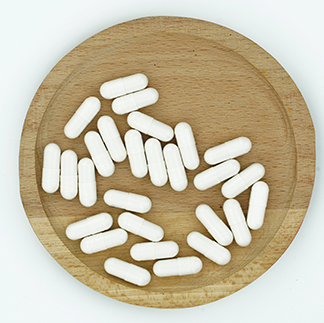
Capsule format is more than a packaging decision. It affects which ingredients you can use, how the formula behaves during storage, how the product is manufactured, and how consumers experience the finished supplement.
Hard gelatin capsules and soft gelatin capsules may look similar on a shelf, but they are built differently and serve different formulation purposes. Hard gelatin capsules are generally selected for powders, granules, pellets, and certain specialized fills. Soft gelatin capsules, commonly called softgels, are usually chosen for oils, liquid ingredients, and semi-solid formulations.
For supplement brands, the right choice should be based on ingredient properties rather than appearance alone. Keju Health’s capsule manufacturing services support different capsule types, specifications, colors, printing options, and packaging formats for customized product development.
This guide compares the two formats from a practical manufacturing perspective and explains how to choose the most suitable option for your formula.
Understanding Hard and Soft Gelatin Capsules
Capsules are oral dosage forms in which active ingredients are enclosed inside an outer shell. Although both hard and soft versions may use gelatin, their structures, production methods, and filling capabilities differ significantly.
The broader category of capsule dosage forms includes several shell materials and delivery designs. For commercial supplement development, however, the most important question is not simply whether a product is a capsule. It is whether the shell and filling system are compatible with the formula.
What Are Hard Gelatin Capsules?
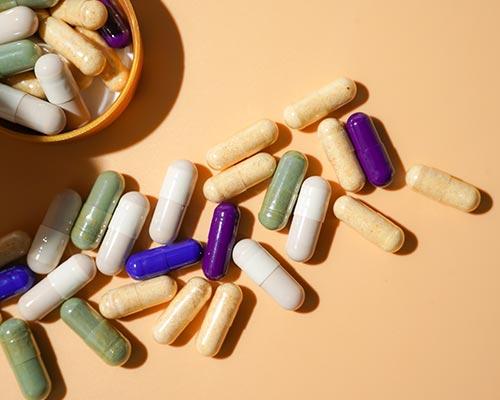
Hard gelatin capsules are normally made as two separate components: a body and a cap. The ingredients are placed inside the body, after which the cap is fitted over it to close the capsule.
This two-piece structure makes hard gelatin capsules highly adaptable. Manufacturers can fill them with powders, granules, beads, mini-tablets, and some semi-solid or liquid systems when suitable sealing technology is available.
What Are Soft Gelatin Capsules?
Soft gelatin capsules are one-piece, hermetically sealed dosage forms. Their shells usually contain gelatin, water, and a plasticizing ingredient that gives the shell its flexibility.
The shell is formed, filled, and sealed during the same production process. This makes softgels especially suitable for oils and formulas that need to remain enclosed inside a continuous sealed shell.
Hard Gelatin Capsules vs Softgels at a Glance
| Comparison Factor | Hard Gelatin Capsules | Soft Gelatin Capsules |
|---|---|---|
| Shell structure | Two-piece cap and body | One-piece sealed shell |
| Shell texture | Firm and relatively rigid | Flexible and elastic |
| Typical fill material | Powders, granules, pellets, beads | Oils, liquids, suspensions, pastes |
| Manufacturing process | Shell preparation followed by filling and closing | Shell forming, filling, and sealing occur together |
| Formula flexibility | Strong for dry and multiparticulate formulas | Strong for lipid-based and liquid formulas |
| Shape options | Mostly cylindrical with standard sizes | Multiple shapes, including oval, oblong, and round |
| Color customization | Cap and body can use matching or contrasting colors | Shell color can be customized as one continuous unit |
| Printing | Text or logos can be printed on the shell | Printing is possible but depends on shape and surface |
| Sealing | Standard locking or additional band sealing | Sealed during encapsulation |
| Development changes | Often easier to adjust during early formulation | Changes may require more process redevelopment |
| Main suitability | Dry supplement formulas and flexible product lines | Oil-based or liquid supplement formulas |
This table provides a general comparison. The final format still depends on ingredient chemistry, dose size, moisture sensitivity, oxygen sensitivity, manufacturing conditions, and intended shelf life.
Shell Structure and Composition

The most visible difference is the physical construction of the shell, but that structural difference also influences production and performance.
Two-Piece Construction
Hard gelatin capsules consist of a longer body and a shorter cap. After filling, the two parts are joined through a mechanical locking design.
This construction allows the shell and filling stages to be handled separately. Empty shells can be prepared first and later filled with a selected formulation. For brands developing several related products, the same basic capsule format can often be used across multiple formulas.
The cap and body may also be produced in different colors. This creates additional branding possibilities without changing the fundamental delivery system.
One-Piece Sealed Construction
A softgel does not have a removable cap or separate body. The shell material is formed into ribbons, the formula is injected between them, and the edges are sealed as the capsule is shaped.
Because filling and sealing happen together, softgel production requires close coordination between shell composition, fill viscosity, processing temperature, and sealing conditions.
A softgel formula cannot be evaluated independently from its shell. The fill and shell must work as a complete system throughout manufacturing and storage.
Why Plasticizers Matter
Softgel shells require flexibility. Plasticizers such as glycerol or sorbitol are commonly incorporated to reduce brittleness and create an elastic shell.
Hard gelatin capsules do not require the same degree of flexibility. Their shells are designed to retain a firm two-piece structure while still disintegrating under appropriate use conditions.
This compositional difference can influence moisture movement between the shell and the fill. It is one reason why compatibility studies should be completed before final production.
Which Fill Materials Work Best?
The physical state of the formula is usually the first filter when choosing between the two capsule types.
Powders and Granules
Hard gelatin capsules are widely used for dry powders and granules. They can accommodate single ingredients, blended formulas, coated particles, and controlled combinations of materials with different particle sizes.
However, a powder must do more than fit inside the capsule. It should flow consistently through filling equipment, remain reasonably uniform during handling, and deliver repeatable fill weights.
Poor-flowing materials may require granulation, particle-size adjustment, or suitable processing aids. A capsule format alone cannot correct an unstable powder blend.
Pellets, Beads, and Mini-Tablets
A major advantage of hard gelatin capsules is the ability to combine multiple physical forms in one shell. A manufacturer may place pellets, beads, granules, or mini-tablets into the same capsule when the formulation and equipment support it.
This makes the format useful for products requiring ingredient separation or a more complex release design. Different particles can be coated or processed separately before being brought together in the final capsule.
Such designs require careful validation. Particle segregation, total fill volume, capsule locking, and content uniformity must all be considered.
Oils and Liquid Ingredients
Softgels are generally more suitable for oils and many liquid formulations. Their sealed shell can contain a measured liquid dose while providing a smooth and familiar consumer format.
Oil-soluble ingredients may also be dispersed or dissolved in a carrier system before encapsulation. This can create a more uniform fill than attempting to convert the same formula into a free-flowing powder.
Not every liquid is automatically suitable for a softgel. Water activity, solvent properties, acidity, and interaction with the shell must be evaluated.
Can Hard Gelatin Capsules Hold Liquids?
Hard gelatin capsules are most commonly associated with dry ingredients, but specialized liquid-filled hard capsule systems are possible. Suitable formulas may be filled and then sealed or banded to help prevent leakage.
This is not a direct substitute for every softgel application. The liquid must be compatible with the shell, filling equipment, sealing method, and storage environment.
A practical development decision should therefore distinguish between “technically fillable” and “commercially stable.” A formula that can be placed into a capsule during a trial may still fail long-term leakage, deformation, or stability testing.
Manufacturing Process Differences
The manufacturing sequence affects development flexibility, equipment selection, quality control, and scale-up.
How Hard Gelatin Capsules Are Produced
Hard capsule manufacturing normally separates shell production from product filling. The shell is formed, dried, removed from molds, trimmed, and assembled into cap-and-body units.
During supplement production, the capsule is separated, filled, closed, inspected, and packaged. Depending on the formula, the filling stage may use powder dosators, tamping systems, pellet fillers, or specialized equipment.
This modular process can be advantageous when a brand expects to develop several formulas. Changes to the powder blend may not always require a complete redesign of the shell system.
How Softgels Are Produced
Softgels are generally produced through an integrated forming, filling, and sealing process. Gelatin mass is prepared and converted into flexible ribbons. The liquid or semi-solid formula is dosed between the ribbons while shaped dies form and seal each capsule.
Freshly formed softgels usually require controlled drying and conditioning. The objective is to reach an appropriate shell condition without causing deformation, cracking, excessive softness, or migration between the fill and shell.
Because multiple process variables interact, softgel scale-up must consider the complete production system rather than only the ingredient formula.
Development Flexibility
Hard gelatin capsules often provide greater flexibility during early formula development. A powder blend can be adjusted, refilled, or reassessed without changing the basic capsule-forming process.
Softgel development may require simultaneous changes to the fill composition, shell formulation, processing temperature, sealing behavior, and drying conditions.
This does not make softgels less effective. It means they require a different development strategy and should be selected when their formulation advantages justify the more integrated process.
Stability, Moisture, and Ingredient Compatibility
Capsule stability is not determined by the shell alone. It depends on interactions among the shell, active ingredients, excipients, packaging, and storage environment.
Moisture Balance in Hard Gelatin Capsules
Gelatin shells naturally contain moisture. If the environment is too dry, hard capsules may lose moisture and become brittle. If humidity is excessive, they may absorb moisture and become soft, distorted, or sticky.
The fill material can also alter this balance. Hygroscopic ingredients may draw moisture from the shell, while ingredients with higher moisture levels may transfer moisture into it.
For this reason, a manufacturer should evaluate the complete capsule system rather than approving the shell and powder separately.
Moisture Migration in Softgels
Softgel shells contain gelatin, water, and plasticizers. During storage, moisture or other components may move between the fill, the shell, and the surrounding environment.
This migration can affect shell hardness, drying behavior, appearance, and physical stability. Packaging selection therefore plays a major role in protecting the finished dosage form.
A well-designed softgel must maintain an acceptable relationship between the fill and shell throughout its intended shelf life.
Oxygen and Light Sensitivity
Ingredients sensitive to oxygen or light require additional protection regardless of capsule format. Shell color, opacity, antioxidants, headspace management, and packaging barriers may all contribute to product stability.
A dark or opaque shell can help reduce light exposure, but it should not be treated as a complete stability solution. The bottle, blister, closure, and storage instructions must also support the formula.
Cross-Linking Risk
Under certain conditions, gelatin shells may become less soluble because of interactions with reactive ingredients, environmental stress, or prolonged storage.
This phenomenon is commonly discussed as gelatin cross-linking. It does not mean that every gelatin capsule will experience the problem, but it highlights the importance of compatibility testing and appropriately designed disintegration studies.
When a formula contains reactive compounds, the development team should assess potential shell interactions early rather than waiting for final shelf-life testing.
Disintegration and Ingredient Release
Consumers often assume that one capsule type is always faster than another. In practice, disintegration depends on shell composition, fill characteristics, storage history, test conditions, and product design.
Hard gelatin capsules usually open or break apart as the shell hydrates. Softgels must first allow the sealed shell to soften and rupture before the liquid fill is released.
A liquid fill may disperse readily after release, but this does not automatically prove that the finished product performs better. Dissolution or dispersion of the active ingredient still depends on its chemical properties and the carrier system.
The most reliable approach is to test the final product rather than predict performance from appearance alone.
Consumer Experience and Product Positioning
Formulation suitability should come first, but the user experience also affects product acceptance.
Swallowing Experience
Softgels often have smooth, rounded surfaces. This can create a comfortable swallowing experience, particularly when the shape and size are well selected.
Hard gelatin capsules are also designed for oral use and are available in multiple standard sizes. Their suitability depends on the required dose volume, capsule dimensions, and target consumer.
Choosing an unnecessarily large capsule simply to reduce the number of daily units may not produce the best experience. Dose size and swallowability should be evaluated together.
Taste and Odor Masking
Both formats can help isolate unpleasant tastes and odors. However, strong-smelling oils or volatile ingredients may require more detailed packaging and compatibility work.
A capsule shell should not be expected to compensate for poor ingredient quality or inadequate sealing. Odor control may depend on raw-material handling, encapsulation, closure integrity, and the final packaging system.
Visual Recognition
Hard gelatin capsules can use different colors for the cap and body, creating distinctive combinations for product identification. Text, numbers, or logos may also be printed on the shell.
Softgels can be produced in different colors, opacities, shapes, and sizes. Their smooth one-piece form often creates a premium visual impression for oil-based supplements.
The strongest branding decision is one that supports both recognition and manufacturing consistency. Highly complex decorative choices should not interfere with inspection or quality control.
How to Choose the Right Capsule Format
A practical selection process should begin with the formula and move outward toward production and branding.
Step 1: Identify the Physical State
Determine whether the formula is primarily a dry powder, granule, pellet system, oil, suspension, paste, or combination.
Dry blends normally point toward hard gelatin capsules. Oils and many liquid systems generally point toward softgels, although specialized exceptions exist.
Step 2: Review Ingredient–Shell Compatibility
Assess moisture sensitivity, hygroscopicity, acidity, reactivity, solvent characteristics, and potential migration.
An ingredient may be stable on its own but unsuitable when placed in direct contact with a particular shell for an extended period.
Step 3: Calculate Dose Volume
The labeled ingredient weight does not directly tell you the required capsule size. Powder bulk density, particle structure, compression behavior, and processing aids affect the volume needed.
For liquid systems, viscosity and dosing behavior must also be considered. The objective is not merely to fit the formula into a shell but to fill it accurately and consistently.
Step 4: Consider Manufacturing Scale-Up
A laboratory sample should represent the intended commercial process as closely as possible. A blend that can be manually filled may behave differently on automated equipment.
Scale-up evaluation should include flow, fill-weight consistency, capsule closure, leakage risk, shell deformation, drying, inspection, and packaging.
Step 5: Match the Format to the Brand
After technical suitability is confirmed, consider color, opacity, printing, shape, bottle or blister format, and consumer positioning.
Branding should refine a technically sound product. It should not determine the dosage form before the formula has been evaluated.
A Practical Decision Framework
The following four-filter model can help product developers make a clearer choice.
Ingredient-State Filter
Ask whether the formula is fundamentally dry, oily, liquid, semi-solid, or multiparticulate.
This usually removes unsuitable options early and prevents unnecessary development work.
Interaction-Risk Filter
Review how the fill may interact with gelatin, moisture, plasticizers, oxygen, light, and packaging materials.
The best-looking format is not the best choice when the ingredient creates an avoidable stability risk.
Manufacturing-Reliability Filter
Consider whether the formula can be filled, sealed, dried, inspected, and packaged consistently at commercial scale.
Repeatable production is more valuable than a technically impressive concept that is difficult to control.
Consumer-Use Filter
Evaluate capsule size, shape, daily serving count, visual recognition, taste masking, and ease of use.
This final filter helps distinguish between two technically workable formats.
Common Product Development Mistakes
Choosing the Capsule Before Finalizing the Formula
A brand may select softgels because they look premium or choose hard gelatin capsules because they appear simpler. This reverses the correct development sequence.
The ingredient system should guide the format. Visual design should come later.
Ignoring Bulk Density
Two powders with the same weight can occupy very different volumes. Selecting a capsule size using weight alone may lead to poor filling performance or an unnecessarily large product.
Bulk density and flow behavior should be measured with the actual production blend.
Assuming All Liquids Belong in Softgels
Softgels are strong candidates for oils and many liquid systems, but the fill still has to be compatible with the gelatin shell and manufacturing process.
Water activity, solvent type, pH, viscosity, and ingredient migration can change the outcome.
Treating Packaging as an Afterthought
The capsule shell is only one layer of product protection. Bottles, blisters, closures, desiccants, oxygen barriers, and secondary packaging may all influence stability.
Packaging tests should be conducted with the finished capsule rather than selected only from appearance or convenience.
Skipping Pilot-Scale Evaluation
A successful laboratory batch does not guarantee stable commercial production. Filling speed, material movement, process temperature, drying, and handling can introduce new variables.
Pilot work allows the manufacturer to identify problems before full production.
When Hard Gelatin Capsules Are the Better Choice
Hard gelatin capsules are often the stronger option when:
- The formulation is primarily a dry powder or granule.
- The product combines pellets, beads, or mini-tablets.
- The formula may require adjustment during development.
- Different cap and body colors are useful for brand recognition.
- A standard cylindrical capsule format fits the consumer experience.
- The manufacturer needs a flexible platform for several related formulas.
- The fill can maintain a suitable moisture balance with the shell.
They are especially useful for brands building broad supplement ranges because the dosage form can support many dry formulations without redesigning the entire shell-forming process.
When Softgels Are the Better Choice
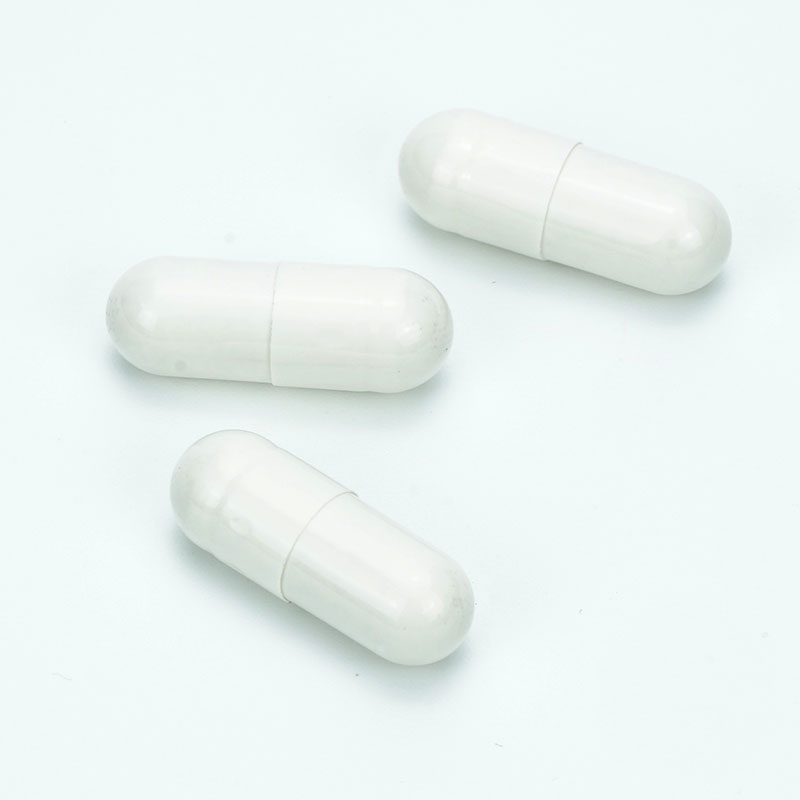
Soft gelatin capsules are often more appropriate when:
- The active ingredient is delivered in an oil.
- The formula is a compatible liquid, suspension, or semi-solid.
- A sealed one-piece system is required.
- The smooth shape supports the intended user experience.
- The formula benefits from a lipid-based carrier.
- A distinctive oval, oblong, or round shape supports product positioning.
- The fill and shell can remain stable throughout production and storage.
Softgels should be selected because their sealed liquid-delivery system solves a formulation need, not simply because of their appearance.
Conclusion
The main difference between hard and soft gelatin capsules lies in their structure and filling system. Hard gelatin capsules use a two-piece shell and are commonly suited to powders, granules, pellets, and multiparticulate formulas. Softgels use a flexible, one-piece sealed shell and are generally better suited to oils, liquids, suspensions, and semi-solid fills.
Neither format is universally superior. A reliable decision depends on ingredient state, shell compatibility, moisture behavior, dose volume, manufacturing repeatability, packaging, and consumer use.
For many dry supplement formulations, hard gelatin capsules offer strong flexibility and efficient product development. For compatible oil-based or liquid formulations, softgels provide a practical sealed delivery system. The best result comes from evaluating the complete product rather than choosing a shell based on appearance alone.
FAQ
Are hard gelatin capsules suitable for all powder supplements?
Hard gelatin capsules work well for many powders, but suitability depends on flow, bulk density, moisture behavior, ingredient reactivity, and dose volume. The final blend should be evaluated on filling equipment and tested in the selected shell and packaging system.
Can hard gelatin capsules contain oil?
Specialized hard capsules may hold certain oils or liquid systems when the formula is compatible and the capsule is properly sealed. However, not every liquid is suitable. Leakage, shell interaction, storage stability, and commercial-scale filling must be tested.
Do softgels dissolve faster than hard gelatin capsules?
Not necessarily. Disintegration and ingredient release depend on shell composition, fill material, storage conditions, and test methods. A liquid fill may disperse quickly after release, but the final product must be tested rather than judged by dosage form alone.
Which capsule type is better for herbal ingredients?
Dry herbal powders and extracts are commonly placed in hard gelatin capsules, while oil-based botanical ingredients may be better suited to softgels. Moisture sensitivity, extract concentration, carrier system, dose volume, and stability determine the final choice.
How should a brand choose a capsule manufacturer?
A brand should review formulation support, pilot testing, filling capabilities, quality systems, traceability, shell customization, packaging options, and scale-up experience. The manufacturer should evaluate the complete formula instead of recommending a capsule based only on ingredient weight.