
Table of Contents
Introduction
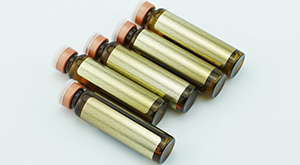
Oral liquids may appear simpler than capsules, tablets, or powders, but their development involves a closely connected set of technical decisions. Ingredient solubility, pH, viscosity, flavor, microbial control, filling accuracy, packaging compatibility, and storage stability can all affect the finished product.
A successful formula must do more than look uniform immediately after mixing. It should remain physically consistent, maintain its approved specifications, move smoothly through production equipment, and perform reliably in its intended package.
This is why oral liquids should be developed as complete systems rather than mixtures of water and selected ingredients. The formula, manufacturing process, container, closure, and storage conditions must be evaluated together.
Keju Health’s functional beverage and oral liquid manufacturing capabilities include formula development, flavor adjustment, stability control, controlled filling, and customized packaging for different liquid product concepts.
Key points covered in this guide include:
- The main types of oral liquids
- Ingredient solubility and compatibility
- pH, viscosity, and sensory design
- Mixing and filling process controls
- Microbial and environmental management
- Packaging compatibility
- Stability evaluation
- Batch consistency and documentation
- Common formulation problems
- Questions to address before production
What Are Oral Liquids?
Oral liquids are liquid-format products intended for oral administration. Depending on the formula, they may contain ingredients that are completely dissolved, finely dispersed, suspended, or distributed through an emulsion system.
The term oral liquids describes a dosage form rather than one fixed formulation method. Two products may both be presented as liquids while requiring completely different processing, filling, mixing, and stability controls.
Common oral liquid structures include:
- Solutions
- Suspensions
- Emulsions
- Syrup-like liquids
- Concentrated liquid shots
- Ready-to-use liquid formulations
- Multi-ingredient botanical liquids
- Marine-derived liquid formulas
- Vitamin and mineral liquids
- Powder-to-liquid systems prepared before use
The most appropriate structure depends on the physical and chemical behavior of the selected ingredients.
Oral Solutions
An oral solution contains ingredients that are dissolved throughout the liquid phase. When properly developed, the formula should appear uniform without visible particles settling at the bottom.
Solutions can provide a clean appearance and consistent distribution, but only when all ingredients remain soluble under the intended pH, temperature, and storage conditions.
A material that dissolves during heated mixing may crystallize after cooling. Solubility must therefore be confirmed under realistic production and storage conditions.
Oral Suspensions
A suspension contains fine solid particles distributed through a liquid. These particles do not completely dissolve and may gradually settle when the container remains still.
The objective is not always to prevent all settling. A controlled suspension should settle slowly, avoid forming a hard compact layer, and redisperse when mixed according to the product instructions.
Particle size, density, viscosity, and suspension agents all influence this behavior.
Oral Emulsions
An emulsion combines two liquid phases that do not naturally remain mixed, such as an oil phase and a water phase.
An emulsifier and an appropriate mixing process help distribute one phase through the other. The formula must be evaluated for separation, droplet growth, surface oil, texture changes, and packaging interaction.
A visually uniform emulsion immediately after production may still separate during storage if the droplet system is not adequately controlled.
Oral Liquids Compared With Other Liquid Formats
Although several liquid products may look similar, their formula structures and manufacturing requirements can differ substantially.
| Liquid Format | Typical Structure | Main Technical Focus | Common Stability Concern |
|---|---|---|---|
| Oral solution | Ingredients dissolved in liquid | Solubility and pH | Crystallization or precipitation |
| Oral suspension | Fine particles dispersed in liquid | Particle size and redispersibility | Settling or hard sediment |
| Oral emulsion | Oil and water phases combined | Droplet control and emulsification | Phase separation |
| Syrup-like liquid | Viscous water-based system | Texture and pouring behavior | Viscosity drift |
| Concentrated liquid shot | Small-volume concentrated formula | Flavor and ingredient loading | Sediment or strong sensory profile |
| Functional beverage | Ready-to-use flavored liquid | Sensory balance and appearance | Color, flavor, or clarity changes |
| Liquid concentrate | Formula intended for measured use | Concentration uniformity | Crystallization or separation |
These categories may overlap. A concentrated liquid can also be a suspension, while a functional beverage may contain an emulsion system.
The technical classification should be based on formula behavior rather than product name alone.
Step 1: Define the Formula Structure
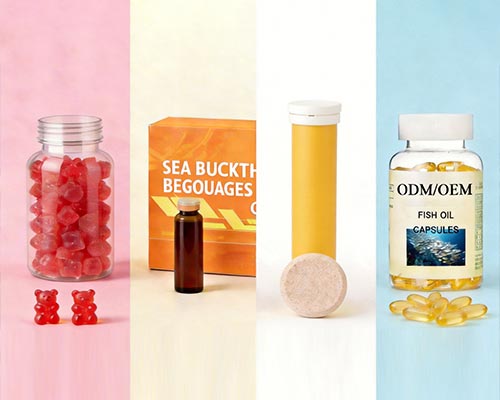
Before selecting flavors, colors, bottles, or labels, the development team should determine what type of oral liquid is technically suitable.
The first questions should focus on ingredient behavior:
- Are the ingredients water-soluble?
- Are any components oil-soluble?
- Do any ingredients remain as solid particles?
- Are extracts likely to create sediment?
- Does the formula contain minerals that may interact?
- Are any ingredients sensitive to pH?
- Will heating affect the formula?
- Is an emulsifier required?
- Does the formula need a suspension system?
- Is the final product intended to be clear, cloudy, or opaque?
These decisions determine the required equipment and development process.
Start With the Complete Ingredient List
Each ingredient should be reviewed individually and as part of the complete blend.
An ingredient may be stable on its own but interact with another component after mixing. Possible interactions include:
- Precipitation
- Color changes
- Flavor changes
- Increased turbidity
- Viscosity changes
- Surface foam
- Sediment formation
- Emulsion instability
- Changes in pH
- Interaction with the container
Compatibility testing should therefore use the full formula rather than isolated materials only.
Define the Intended Appearance
Appearance is an important technical specification.
The development team should define whether the formula is intended to be:
- Transparent
- Slightly cloudy
- Naturally opaque
- Uniformly colored
- Free from visible sediment
- A controlled suspension
- A stable emulsion
- Easily redispersed
Without an approved visual standard, normal ingredient variation may be mistaken for a production problem, while genuine instability may be accepted without sufficient review.
Step 2: Evaluate Solubility and Compatibility
Solubility is one of the most important factors in oral liquid development. It determines whether the product can remain a solution or requires a suspension or emulsion system.
A formula should not be considered stable simply because all materials disappear during mixing.
Temperature-Dependent Solubility
Some materials dissolve more easily at elevated temperatures. When the formula cools, the material may leave the liquid phase and form crystals or sediment.
This can happen gradually rather than immediately. A sample that looks clear on the first day may become cloudy or develop particles later.
Development testing should therefore include:
- Mixing temperature
- Cooling rate
- Final storage temperature
- Temperature cycling
- Ingredient concentration
- pH changes
- Storage duration
The goal is to understand how the formula behaves after production, not only during preparation.
Mineral Interactions
Minerals can be challenging in oral liquids because they may affect flavor, color, clarity, and pH.
Two individually soluble ingredients may interact and form an insoluble compound after they are combined. This can create haze, crystals, floating material, or sediment.
The order of addition may also influence the result. A controlled addition sequence can sometimes reduce localized concentration and improve mixing consistency.
Botanical Extracts
Botanical ingredients can introduce natural variation in color, flavor, aroma, and insoluble material.
The extraction method, carrier, concentration, particle level, and storage history may affect liquid behavior. A botanical formula may require filtration, suspension support, flavor balancing, or a defined natural sediment specification.
Natural variation should be managed through incoming material standards rather than removed from consideration.
Oil-Soluble Ingredients
Oil-soluble materials cannot normally remain uniformly distributed in a water-based liquid without an appropriate delivery system.
Possible approaches include:
- Emulsion development
- Solubilization systems
- Suitable carrier ingredients
- Controlled homogenization
- Alternative product formats
The selected approach should be evaluated for separation, droplet size, appearance, flavor, and long-term compatibility.
Step 3: Control pH and Viscosity
pH and viscosity influence many aspects of oral liquids, including solubility, flavor, appearance, processing behavior, and storage consistency.
They should be treated as core formula specifications rather than final adjustments.
Why pH Matters
pH can influence:
- Ingredient solubility
- Color stability
- Flavor perception
- Preservative-system performance
- Container compatibility
- Sediment formation
- Emulsion behavior
- Ingredient degradation
- Processing requirements
The target pH should include an acceptable operating range. A single target number without a tolerance does not provide enough information for routine production.
The development team should also identify when pH is measured. Results taken immediately after mixing may differ from results recorded after the formula has rested.
Buffering Capacity
Some formulas resist changes in pH more strongly than others. This is known as buffering capacity.
A small amount of an adjusting ingredient may create a large change in one formula but almost no change in another. The adjustment method should therefore be developed specifically for the complete blend.
Adding excessive pH-adjusting material can affect flavor or create new compatibility problems.
Why Viscosity Matters
Viscosity describes how easily a liquid flows.
A very thin liquid may not keep suspended particles evenly distributed. A formula that is too thick may create difficulties during pumping, filling, pouring, or measured use.
Viscosity influences:
- Suspension stability
- Mouthfeel
- Pouring behavior
- Filling speed
- Pump selection
- Mixing energy
- Foam release
- Container drainage
- Measurement consistency
The viscosity target should reflect both the desired sensory experience and the manufacturing process.
Viscosity Can Change Over Time
Some thickening systems require time to hydrate fully. The liquid may continue to thicken after the main mixing stage.
Other systems may lose viscosity due to pH, minerals, temperature, high-shear processing, or ingredient interactions.
Measurements should therefore be taken at defined stages, such as:
- After initial mixing
- After hydration
- Before filling
- After filling
- During stability evaluation
Step 4: Develop Flavor and Sensory Balance
Flavor development is a technical process, especially when the formula contains concentrated minerals, peptides, marine-derived materials, botanical extracts, or naturally strong aromas.
Adding more flavoring does not automatically produce a balanced result.
Build the Flavor Around the Base Formula
The original formula may contain:
- Bitterness
- Sourness
- Mineral notes
- Marine notes
- Herbal aromas
- Astringency
- Metallic characteristics
- Lingering aftertaste
- Natural color
- Ingredient-specific texture
The flavor profile should be developed after the base formula reaches a reasonably stable technical structure.
If the formula changes significantly after flavor approval, the sensory profile may need to be reviewed again.
Sweetness, Acidity, and Aroma
Flavor balance usually depends on the relationship among sweetness, acidity, aroma, texture, and aftertaste.
A strong aroma cannot always hide bitterness. Excessive sweetness may intensify certain aftertastes, while unsuitable acidity may create harshness or affect ingredient stability.
Several small adjustments often produce a more balanced result than one large change.
Flavor Stability
Flavor can change during storage.
Possible changes include:
- Loss of top notes
- Increased bitterness
- Development of an unexpected aroma
- Interaction with packaging
- Changes caused by light exposure
- Differences between room-temperature and chilled use
- Changes after repeated opening
Sensory evaluation should therefore be included in stability work, not limited to the initial development sample.
Foam Control
Some ingredients naturally generate foam during mixing. High-speed agitation may increase the problem.
Foam can affect:
- Mixing efficiency
- Visual appearance
- Filling accuracy
- Headspace consistency
- Line speed
- Container cleanliness
The mixing process should introduce enough energy for uniformity without creating unnecessary air incorporation.
Step 5: Establish Microbial and Environmental Controls
Water-based oral liquids require carefully defined manufacturing and environmental controls.
The complete process should address raw materials, water, equipment, production areas, holding times, filling, closures, and packaging.
Water Quality
Water is often the largest component of oral liquids, making its quality central to the formula.
The manufacturing system should define:
- Water specification
- Treatment process
- Storage conditions
- Distribution system
- Sampling plan
- Testing frequency
- Equipment sanitation
- Recordkeeping
Water quality should be monitored as part of the production system rather than treated as a general utility.
Raw-Material Handling
Powders, extracts, flavors, oils, and liquid ingredients can introduce different levels of processing complexity.
Incoming materials should be stored and handled according to their approved requirements. Open containers should be managed through defined procedures to reduce mix-ups and uncontrolled exposure.
Batch identification should remain visible throughout weighing and production.
Equipment Cleaning
Mixing tanks, transfer lines, pumps, filters, filling nozzles, and holding vessels should be cleaned through documented procedures.
The cleaning process should consider:
- Product residue
- Oils
- Strong flavors
- Colors
- Thickening agents
- Botanical material
- Equipment design
- Hard-to-reach surfaces
- Time between production runs
A clean-looking surface does not by itself confirm that the complete equipment pathway has been adequately addressed.
Holding Time
Once the liquid has been mixed, it may remain in a tank before filling.
The maximum approved holding time should be defined because extended storage in a processing vessel may affect:
- Temperature
- Sediment
- pH
- viscosity
- Flavor
- Foam
- Microbial condition
- Ingredient uniformity
The formula should remain within specification throughout the approved holding period.
Step 6: Control Mixing, Filtration, and Filling
The transition from development sample to full production introduces changes in vessel size, mixing energy, transfer distance, holding time, and filling speed.
A laboratory formula cannot simply be multiplied without considering these process differences.
Order of Addition
The sequence in which materials are added may affect the finished liquid.
A typical process may include:
- Preparing the main liquid phase
- Adjusting the initial temperature
- Pre-blending selected dry ingredients
- Adding highly soluble materials
- Hydrating thickening or suspension ingredients
- Introducing extracts or concentrates
- Adding oil-based components
- Applying controlled homogenization
- Adjusting flavor
- Confirming pH and volume
- Allowing foam to release
- Transferring to the filling system
The actual sequence should be developed for the specific formula.
Mixing Energy
Too little mixing may leave the formula non-uniform. Excessive mixing may introduce air, damage sensitive structures, reduce viscosity, or create unwanted foam.
Mixing specifications may include:
- Mixer type
- Mixing speed
- Mixing time
- Temperature
- Batch volume
- Addition rate
- Homogenization setting
- Resting period
Recording these parameters improves repeatability between batches.
Filtration
Filtration may be used to remove unwanted particles or improve visual consistency.
However, filtration is not appropriate for every oral liquid. A suspension may contain intentionally dispersed particles that would be removed by an unsuitable filter.
Filter selection should consider:
- Formula type
- Target clarity
- Particle size
- Flow rate
- Viscosity
- Ingredient retention
- Filter compatibility
Filtration should solve a defined technical need rather than serve as a routine step without evaluation.
Filling Accuracy
The filling system should deliver a controlled quantity into each container.
In-process monitoring may include:
- Fill volume
- Fill weight
- Container position
- Nozzle performance
- Foam level
- Headspace
- Closure application
- Seal condition
- Label placement
- Container cleanliness
Sampling should continue throughout the filling run so that process drift can be identified.
Step 7: Match the Formula With the Packaging
The package is part of the oral liquid system. It affects storage, appearance, pouring, measured use, light exposure, oxygen exposure, and product identification.
Packaging selection should occur during development rather than after the formula has been completed.
Bottle Material
Different container materials may provide different levels of:
- Light protection
- Oxygen barrier
- Moisture barrier
- Impact resistance
- Chemical compatibility
- Shape flexibility
- Label adhesion
The formula should be tested in the intended container because compatibility cannot be confirmed from material descriptions alone.
Closure System
The closure should fit the bottle and intended use pattern.
Possible components include:
- Screw caps
- Tamper-evident bands
- Inner seals
- Liners
- Measuring caps
- Droppers
- Pumps
- Pouring inserts
The complete closure system should be checked for fit, leakage, repeated opening, and interaction with the formula.
Headspace
Headspace is the empty area between the liquid surface and closure.
It can influence product movement, oxygen exposure, filling consistency, and appearance. The approved fill level should account for normal production variation and the characteristics of the liquid.
Foamy formulas may require additional filling-process control to achieve consistent headspace.
Light Protection
Some ingredients or colors may change with prolonged light exposure.
Possible approaches include:
- Opaque containers
- Tinted bottles
- Secondary cartons
- Light-resistant labels
- Defined storage instructions
Packaging protection should be verified with the finished product rather than assumed from container color.
Quality Specifications for Oral Liquids
A well-developed product should have measurable specifications covering the formula, filling process, and finished package.
| Quality Parameter | What It Evaluates | Possible Observation |
| Appearance | Overall visual consistency | Clear, cloudy, opaque, or suspended |
| Color | Batch-to-batch visual range | Approved reference range |
| Aroma | Sensory consistency | Expected profile without unusual notes |
| pH | Formula environment | Defined target and tolerance |
| Viscosity | Flow and texture | Approved measurement range |
| Fill volume | Quantity in each container | Within established tolerance |
| Specific gravity | Formula density | Supports filling and identity checks |
| Redispersibility | Suspension behavior | Sediment mixes back into the liquid |
| Separation | Emulsion or suspension stability | No unacceptable phase split |
| Sediment | Particle behavior | Within the approved visual standard |
| Closure integrity | Package performance | No leakage or incomplete seal |
| Microbial specification | Process and product control | Within the approved criteria |
| Label and code | Traceability | Clear and correctly positioned |
Specifications should be developed around the actual product. Applying the same limits to every formula can create unsuitable standards.
Stability Evaluation for Oral Liquids
Stability evaluation examines how the formula and package behave over time under defined conditions.
It should include more than a final ingredient measurement.
Physical Stability
Physical evaluation may monitor:
- Color
- Clarity
- Turbidity
- Sediment
- Crystals
- Phase separation
- Viscosity
- Foam
- Container deformation
- Leakage
- Closure performance
Changes should be documented using consistent methods and approved reference standards.
Chemical Stability
Chemical evaluation depends on the formula and approved specification.
The plan may assess:
- Selected ingredient markers
- pH
- Oxidation indicators
- Preservative-system components
- Color stability
- Aroma changes
- Interaction between ingredients
The appropriate tests should be selected during product development.
Packaging Stability
The container and closure should be included in stability work.
Packaging observations may include:
- Leakage
- Paneling
- Swelling
- Seal changes
- Closure discoloration
- Label lifting
- Odor transfer
- Formula staining
- Dropper or pump performance
A formula stored in a laboratory container may not behave the same way in its final package.
Temperature Cycling
Products may experience changing temperatures during storage and transport.
Temperature cycling can reveal problems such as:
- Crystallization
- Emulsion separation
- Viscosity changes
- Sediment compaction
- Bottle deformation
- Closure leakage
- Color drift
Temperature testing should be interpreted alongside normal storage evaluation rather than used as a complete substitute for it.
Common Problems in Oral Liquids
Precipitation After Cooling
A formula may remain clear during heated mixing but produce crystals after cooling.
The development team should review ingredient concentration, pH, cooling rate, order of addition, and temperature-dependent solubility.
Hard Sediment
Suspended particles may settle and form a compact layer that is difficult to redisperse.
Possible factors include particle size, density difference, insufficient viscosity, unsuitable suspension agents, or extended holding time.
Phase Separation
An emulsion may develop a visible upper or lower layer.
Potential causes include unsuitable emulsification, droplet growth, temperature stress, density differences, or ingredient interaction.
Excessive Foam
Foam can develop from high mixing speed, protein-like ingredients, extracts, or filling-line turbulence.
The process should be reviewed before introducing additional formula components solely to control foam.
Flavor Drift
The flavor may become weaker, sharper, or less balanced over time.
Possible causes include ingredient interaction, aroma loss, oxidation, packaging absorption, temperature, or changes in acidity.
Viscosity Variation
The liquid may become thicker or thinner after production.
The cause may involve incomplete hydration, pH changes, mineral interaction, processing shear, temperature, or ingredient variation.
Container Interaction
The formula may affect the liner, closure, bottle wall, label, or measuring component.
Compatibility work should include the complete intended package.
Batch Consistency and Traceability
Oral liquids require detailed batch records because multiple process variables can influence the result.
A production record may include:
- Raw-material lot numbers
- Weighed quantities
- Addition sequence
- Mixing speed
- Mixing time
- Product temperature
- pH adjustments
- Homogenization settings
- Final volume
- Viscosity results
- Holding time
- Filling settings
- Fill checks
- Closure checks
- Packaging codes
- Finished-product results
- Release authorization
These records create a direct link between the approved process and the finished batch.
Why Process Records Matter
A finished-product test provides information about the sampled units, but it does not explain how the batch was made.
Process records allow the quality team to compare batches, investigate unexpected changes, and identify which manufacturing variable may have contributed to a result.
Repeatable production depends on controlling both the formula and the process.
Oral Liquids vs Capsules, Powders, and Tablets
The appropriate format depends on ingredient behavior, serving configuration, sensory requirements, packaging, and production goals.
| Format | Main Structure | Key Development Focus | Typical Limitation |
| Oral liquids | Ingredients carried in a liquid system | Stability, flavor, pH, viscosity | More complex liquid compatibility |
| Hard capsules | Powder or particles inside a shell | Flow and shell compatibility | Limited internal volume |
| Softgels | Oil or liquid inside a sealed shell | Fill-to-shell compatibility | Specialized encapsulation process |
| Powders | Dry blend prepared for direct or mixed use | Flow, taste, and moisture | Requires mixing or measured use |
| Tablets | Compressed solid system | Compression and disintegration | Less suitable for some ingredients |
| Gummies | Structured gel system | Texture, flavor, and moisture | Limited formula flexibility |
Oral liquids may be suitable when a liquid serving format, adjustable volume, or specific sensory experience is part of the product concept.
The final choice should be based on technical fit rather than format popularity.
How to Prepare an Oral Liquids Development Brief
A clear project brief allows the formulation and production teams to evaluate feasibility efficiently.
Useful information includes:
- Complete ingredient concept
- Target ingredient quantities
- Intended serving volume
- Solution, suspension, or emulsion preference
- Required appearance
- Preferred flavor direction
- Sweetness preference
- Texture preference
- Target pH
- Bottle volume
- Closure type
- Packaging design
- Storage expectations
- Testing requirements
- Documentation requirements
- Production schedule
When some details are still open, the manufacturer can use the brief to identify which development trials are required.
Questions to Address Before Production
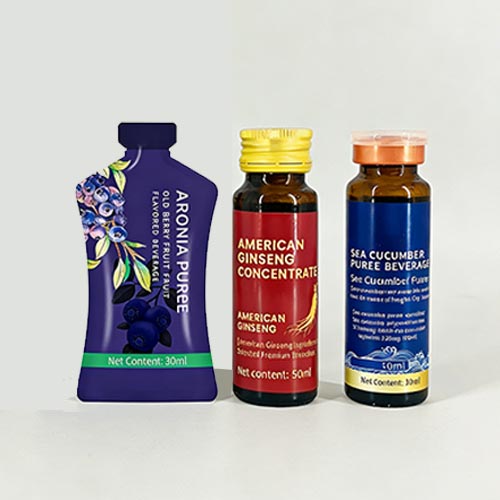
Before an oral liquid formula enters full production, the technical team should address the following questions:
- Is the product a solution, suspension, or emulsion?
- Are all ingredients compatible in the final formula?
- Is the pH range clearly defined?
- Has viscosity been measured after full hydration?
- Is the appearance standard documented?
- Has the flavor been evaluated in the final formula?
- Does the liquid produce excessive foam?
- Is the addition sequence approved?
- Is the maximum holding time defined?
- Is the fill tolerance established?
- Has the container been tested with the formula?
- Has the closure system been evaluated?
- Are sediment and separation limits defined?
- Is the stability plan approved?
- Are batch records and traceability requirements complete?
Clear answers reduce uncertainty during scale-up and routine manufacturing.
Conclusion
Reliable oral liquids are created through coordinated formulation, processing, testing, filling, and packaging decisions.
The development process should begin by defining whether the product is a solution, suspension, or emulsion. Ingredient solubility, pH, viscosity, flavor, mixing behavior, water quality, filling accuracy, packaging compatibility, and storage stability should then be assessed as connected parts of one system.
A liquid that looks uniform after mixing is not automatically ready for production. It must remain within its approved specifications throughout holding, filling, storage, and intended use.
The strongest oral liquids are supported by clear formula standards, repeatable process parameters, appropriate packaging, stability evidence, and complete batch documentation.
FAQ
What are oral liquids?
Oral liquids are liquid-format products intended for measured oral use. They may be solutions, suspensions, emulsions, syrups, concentrates, or ready-to-use drinks. The correct structure depends on ingredient solubility, texture, appearance, and storage requirements.
What is the difference between a solution and a suspension?
In a solution, the ingredients are dissolved throughout the liquid. A suspension contains fine solid particles that remain dispersed but may gradually settle. A well-developed suspension should avoid hard sediment and redisperse consistently.
Why does pH matter in oral liquids?
pH can influence solubility, flavor, color, viscosity, ingredient compatibility, and storage behavior. The formula should have an approved pH range and a controlled adjustment method rather than relying on a single measurement taken during initial mixing.
How is separation controlled in oral liquids?
Separation control depends on the formula type. Suspensions may require particle-size and viscosity management, while emulsions require suitable emulsification and homogenization. The finished formula should be evaluated under defined storage conditions.
Which packaging is suitable for oral liquids?
Packaging depends on light sensitivity, oxygen exposure, viscosity, serving method, and closure requirements. Bottles, liners, seals, measuring caps, droppers, or pumps should be tested with the complete formula before the final configuration is approved.