



Table of Contents
Introduction

Searching for an Align dietary supplement often leads to a much broader question: what actually makes a probiotic supplement reliable?
The answer is more complex than choosing the package with the largest number, the longest ingredient list, or the strongest front-label message. A probiotic formula should be evaluated through its exact microorganism strains, viable count, storage stability, delivery format, supporting ingredients, manufacturing controls, and suitability for the intended user.
Probiotics are live microorganisms used in foods and dietary supplements. However, different microorganisms do not automatically produce the same effects. Even two products containing bacteria from the same species may perform differently when they use different strains, doses, protective technologies, or storage conditions.
This guide explains how to evaluate an Align dietary supplement search result without relying on brand familiarity alone. It also provides a practical framework that can be applied to other probiotic supplements.
Align is a third-party trademark used in this article only to identify the search topic. This content is independent and educational.
What Is an Align Dietary Supplement?
The phrase Align dietary supplement generally refers to a probiotic supplement associated with digestive wellness. It is a brand-specific search term rather than a scientific category.
The scientific category behind the keyword is the probiotic dietary supplement. These products contain selected live microorganisms, commonly delivered through capsules, powders, gummies, chewable products, or functional beverages.
That distinction is important. A familiar brand name may help you identify a product line, but it does not replace careful evaluation of:
- line, but it does not replace careful evaluation of:
- The complete strain name
- Viable microorganism count
- Guaranteed potency period
- Serving instructions
- Storage requirements
- Other active and inactive ingredients
- Allergen information
- Quality and stability controls
Instead of asking only whether an Align dietary supplement is popular, a more useful question is whether its specific formulation matches the intended nutritional purpose and can remain stable through its stated shelf life.
Why the Exact Probiotic Strain Matters
One of the most important principles in probiotic science is strain specificity.
A probiotic name may contain three levels of identification:
- Genus
- Species
- Strain designation
For example, identifying only the genus or species is similar to identifying a plant by its broad family while ignoring its exact variety. Closely related microorganisms can have different properties, survival rates, and research histories.
The term probiotics covers many microorganisms used across foods and supplements. It does not mean that every probiotic strain is interchangeable.
When reviewing an Align dietary supplement or any alternative formula, look for the most complete microorganism identification available. A label that lists only a broad probiotic blend without clearly identifying its components provides less information for meaningful evaluation.
Strain-level transparency also helps connect a finished formula to relevant research. Evidence associated with one strain should not automatically be transferred to another strain from the same species.
CFU Numbers Need Context
CFU stands for colony-forming units. It is commonly used to indicate the estimated number of viable microorganisms in a probiotic serving.
A larger CFU number may look more impressive, but it does not automatically indicate a better product. CFU should be interpreted together with the strain, intended use, serving frequency, stability data, and guaranteed potency period.
Two labels can present very different types of information:
- CFU count at the time of production
- CFU count guaranteed through the end of shelf life
- Total CFU for a multi-strain blend
- CFU for each individual strain
- CFU per capsule
- CFU per complete daily serving
These figures are not directly comparable unless they use the same measurement basis.
A formula may begin with a high overage during production because some microorganisms naturally lose viability over time. The more useful question is how many viable microorganisms are expected to remain when the product is used, not only how many were added on the manufacturing date.
Compare the Most Important Label Details
A reliable comparison should go beyond the product name and front-label CFU statement.
| Evaluation point | What to look for | Why it matters |
|---|---|---|
| Microorganism identity | Genus, species, and strain code | Different strains may have different characteristics |
| CFU statement | Amount per serving and guarantee period | A production-day count may not reflect end-of-shelf-life potency |
| Serving size | Capsules, scoops, gummies, or liquid volume | The daily amount may differ from the amount shown per unit |
| Storage instructions | Temperature, moisture, and refrigeration guidance | Poor storage can reduce microorganism viability |
| Delivery format | Capsule, powder, gummy, tablet, or beverage | Format affects convenience, stability, and ingredient compatibility |
| Supporting ingredients | Prebiotics, vitamins, minerals, enzymes, or botanicals | Additional ingredients change the purpose and tolerance profile |
| Inactive ingredients | Fillers, sweeteners, coatings, flavors, and carriers | These may affect suitability and user acceptance |
| Quality information | Batch controls, stability testing, and traceability | Quality systems help maintain consistency between batches |
This table offers a better foundation for evaluating an Align dietary supplement than relying on one headline number.
Potency at Expiry Matters More Than an Opening Number
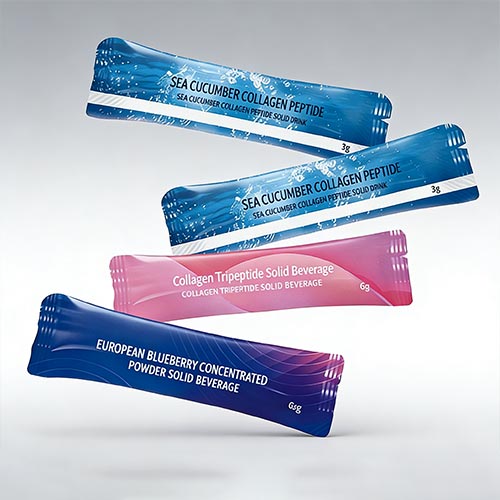
Probiotic microorganisms are sensitive biological materials. Their viability can be affected by heat, oxygen, moisture, processing pressure, packaging, transportation, and storage duration.
For this reason, a responsible formulation process does not stop after adding a calculated quantity of microorganisms. It should also consider whether the selected strains can survive the complete manufacturing and storage cycle.
Important stability questions include:
- Was the CFU level tested in the finished dosage form?
- Is potency guaranteed through the stated shelf life?
- Does the product require refrigeration?
- What happens after the package is opened?
- Does the packaging provide sufficient moisture and oxygen protection?
- Are storage instructions realistic for normal use?
A shelf-stable product does not mean that environmental conditions are irrelevant. Leaving a probiotic supplement in excessive heat or humidity may still reduce its quality.
When evaluating an Align dietary supplement, read the storage instructions before assuming that every probiotic product can be handled in the same way.
Capsule, Powder, Gummy, or Liquid?
The dosage form influences much more than convenience. It can affect microorganism survival, serving accuracy, ingredient compatibility, taste, packaging, and daily adherence.
Capsules
Capsules provide a measured serving, protect unpleasant flavors, and can be easier to integrate into a regular routine. Shell material, moisture level, oxygen exposure, and fill uniformity all require careful control.
Professional capsule manufacturing should account for the interaction between the probiotic material, carrier ingredients, capsule shell, packaging, and expected storage environment. Keju’s published capabilities include formula development, raw-material manand multiple packaging options.
Powders
Powders can deliver larger ingredient quantities and allow flexible serving formats. They may be packed in jars, sachets, stick packs, or other moisture-resistant containers.
However, powder quality depends on mixing uniformity, flowability, solubility, moisture control, flavor, and accurate serving preparation. Keju’s powder manufacturing category specifically includes probiotic and dietary-rmulations.
Gummies and Chewables
Gummies may be convenient for people who dislike swallowing capsules, but heat, moisture, sugar content, texture, and processing conditions can complicate probiotic stability.
Functional Beverages
Liquid products offer an accessible consumption experience, yet water activity and storage conditions can create additional formulation challenges for live microorganisms.
There is no universally superior format. The appropriate option is the one that balances stability, serving accuracy, user preference, and formulation requirements.
Understand Prebiotics, Probiotics, and Synbiotics
These terms are related but should not be used interchangeably.
Probiotics are live microorganisms included in a suitable product or food. Prebiotics are substances used by selected microorganisms and may help support their growth or activity. A synbiotic formulation combines probiotics with compatible prebiotic components.
An Align dietary supplement may therefore be evaluated not only by its probiotic content but also by whether it contains ingredients such as dietary fiber or other supporting compounds.
More ingredients do not always produce a more suitable formula. A prebiotic may be beneficial in an appropriately designed product, but it can also change taste, texture, serving size, and digestive tolerance.
The most useful formulation is not the one with the longest label. It is the one in which each ingredient has a clear technical and nutritional purpose.
Examine Inactive Ingredients and Dietary Suitability
The microorganism strain may be the headline ingredient, but inactive ingredients can strongly influence the user experience.
A probiotic capsule or powder may contain:
- Flow agents
- Carriers
- Capsule-shell materials
- Stabilizers
- Sweeteners
- Flavoring ingredients
- Coloring agents
- Anti-caking ingredients
- Moisture-control components
These ingredients can support production consistency and product stability. However, they should still be reviewed for dietary preferences, sensitivities, and intended positioning.
When comparing an Align dietary supplement with another formula, check the complete ingredient list rather than assuming that similar CFU counts mean similar products.
Allergen statements also deserve attention. Manufacturing facilities may handle several ingredient categories, so label information and production controls should be assessed together.
Do Not Confuse Probiotic Variety with Proven Value
A multi-strain product may contain several different microorganisms, while a single-strain product focuses on one clearly identified strain.
Neither approach is automatically superior.
A multi-strain formula may broaden the product concept, but it also creates more complex stability and compatibility requirements. Each strain may respond differently to temperature, moisture, oxygen, and processing.
A single-strain formula may appear simpler, yet it can provide stronger formulation clarity when the selected strain has a defined purpose and supporting evidence.
The number of strains should therefore be treated as a formulation characteristic, not a quality score.
The same principle applies to CFU counts. A targeted formula with an appropriate, stable quantity may be more meaningful than a very high number presented without clear strain identification or end-of-shelf-life verification.
Evaluate Evidence Without Overreading Marketing Claims
Responsible probiotic evaluation requires a distinction between product evidence, strain evidence, and general microbiome research.
General research showing that the gut microbiome plays an important role does not prove that every probiotic product produces the same result. Likewise, research involving one strain, dose, population, and study design should not be automatically applied to a different formula.
When reviewing the evidence behind an Align dietary supplement, ask:
- Is the research based on the exact strain?
- Does the studied dose match the finished product?
- Was the product used consistently?
- Was the research conducted on a relevant population?
- Was the outcome meaningful and clearly measured?
- Are limitations acknowledged?
- Does the label avoid overstating the findings?
Authoritative health resources note that probiotic effects can vary according to the microorganism and intended use. Research is stronger for some applications than o many areas.
A trustworthy article or label should communicate uncertainty rather than turning preliminary findings into guaranteed outcomes.
Manufacturing Quality Shapes Finished-Product Reliability
A strong probiotic formula can lose value when manufacturing controls are weak.
Important production considerations include:
- Qualified raw-material suppliers
- Microorganism identity verification
- Contamination controls
- Temperature and humidity management
- Accurate weighing and blending
- Uniform capsule or powder filling
- Packaging compatibility
- Finished-product testing
- Stability studies
- Batch traceability
- Clear storage instructions
Probiotic materials may require different handling from conventional vitamins or mineral powders. The manufacturing environment and process sequence should be designed around microorganism sensitivity.
Packaging should also be treated as part of the formulation. A bottle, blister pack, sachet, or stick pack is not merely a visual container. It helps control exposure to environmental conditions that can affect stability.
For this reason, evaluating an Align dietary supplement should include both the ingredient panel and the systems used to protect the finished product.
Consider Personal Needs and Professional Guidance
A probiotic supplement should complement a suitable diet and daily routine rather than replace them.
Before using a product, consider:
- The reason for taking it
- Existing dietary habits
- Other supplements being used
- Ingredient sensitivities
- Swallowing preferences
- Storage access
- Ability to follow the serving instructions
- Whether professional advice is appropriate
Some people may experience temporary digestive changes after starting a probiotic product. Individual responses can vary, and a product that works well for one person may not suit another.
Extra care is appropriate for people with significant health concerns, weakened immune defenses, complex nutritional needs, or ongoing professional treatment. NCCIH notes that probiotic safety can depend on a person’s underlying condition ups require particular caution.
Dietary supplements should not be presented as substitutes for professional assessment or established care.
Common Mistakes When Comparing Probiotic Supplements
A frequent mistake is choosing solely by the highest CFU number. This ignores strain identity, dosage, storage, and the period for which potency is guaranteed.
Another mistake is assuming that more strains always mean broader or stronger performance. A longer blend can add complexity without providing clearer evidence.
Other common errors include:
- Ignoring the difference between CFU at manufacture and CFU at expiry
- Comparing per-capsule values with per-serving values
- Overlooking storage instructions
- Assuming all products from the same species are equivalent
- Treating front-label statements as complete evidence
- Ignoring inactive ingredients
- Changing several supplements at the same time
- Expecting immediate or identical results for every user
A better process is to compare products one factor at a time and keep expectations consistent with the available evidence.
A Practical Five-Step Evaluation Framework
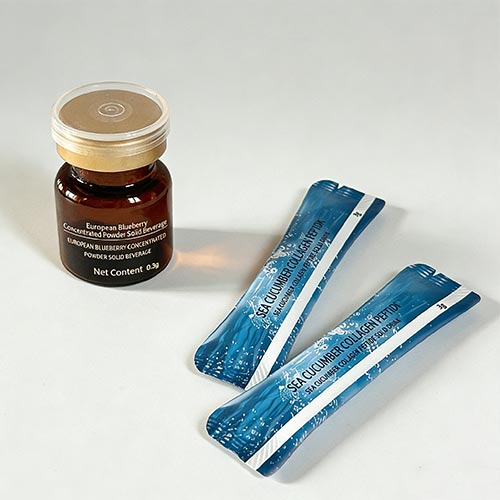
You can evaluate an Align dietary supplement or another probiotic product through five filters.
1. Identity
Confirm the complete genus, species, and strain information wherever possible.
2. Viability
Check the CFU amount, serving basis, guarantee period, and storage requirements.
3. Formulation
Review prebiotics, vitamins, minerals, carriers, sweeteners, allergens, and other ingredients.
4. Delivery
Choose a capsule, powder, gummy, or liquid that supports stability and consistent use.
5. Verification
Look for transparent labeling, realistic claims, manufacturing controls, traceability, and evidence relevant to the finished formulation.
This framework moves the decision beyond brand recognition. It focuses attention on the technical factors that determine whether a probiotic supplement is clearly described, appropriately formulated, and practical to use.
Conclusion
An Align dietary supplement should not be judged by brand recognition or one large number on the package. Reliable probiotic evaluation requires a closer look at strain identity, CFU measurement, shelf-life potency, delivery format, supporting ingredients, storage requirements, evidence, and manufacturing quality.
The exact strain matters. Potency at the time of use matters. Packaging and environmental protection matter. Most importantly, the formula must be appropriate for the intended user and supported by responsible, proportionate communication.
By applying a structured evaluation process, you can distinguish meaningful probiotic quality indicators from surface-level marketing. That approach is useful not only for an Align dietary supplement but for any probiotic product being compared.
FAQ
What is an Align dietary supplement?
An Align dietary supplement generally refers to a branded probiotic product intended for daily digestive support. Because formulas can differ, review the exact strain, CFU per serving, supporting ingredients, storage instructions, and potency guarantee shown on the specific label.
Is a higher CFU count always better?
No. A higher number does not automatically mean better quality or suitability. CFU should be considered alongside strain identity, serving size, evidence, stability, storage conditions, and whether potency is guaranteed through the end of the product’s shelf life.
How long does a probiotic supplement take to work?
There is no universal timeline. Individual response can depend on the strain, serving amount, consistency, diet, intended purpose, and personal health factors. Follow the label instructions and seek qualified guidance when symptoms persist or professional care is already involved.
Should an Align dietary supplement be refrigerated?
Storage requirements depend on the specific formulation and packaging. Some probiotic products are designed for normal room-temperature storage, while others require refrigeration. Always follow the label and protect the product from excessive heat, moisture, and direct sunlight.
Can an Align dietary supplement be taken with other supplements?
Compatibility depends on the full ingredient lists, serving amounts, personal needs, and any products already being used. Review overlapping ingredients and consult an appropriately qualified professional when combining supplements or managing complex health considerations.